

In this week's edition of The Pointillist, a spotlight on nature and the various levers – finance, public policy, market instruments – being pulled to improve humanity's place within it. Links below on New Zealand's new biodiversity financing assessment, the promise and reality of biodiversity credit markets, the challenge of nature data, the importance of Indigenous data sovereignty, and the ecosystems that are too big and too important to fail.

Ian Herbert, New Zealand BIOFIN Assessment Lead at University of Otago, has just published the inaugural Biodiversity Expenditure Review (BER) for Aotearoa New Zealand. BIOFIN, which developed the methodology, is the Biodiversity Finance Initiative of the United Nations Development Programme (UNDP). The PDF is attached below:
Here are a few takeaways:
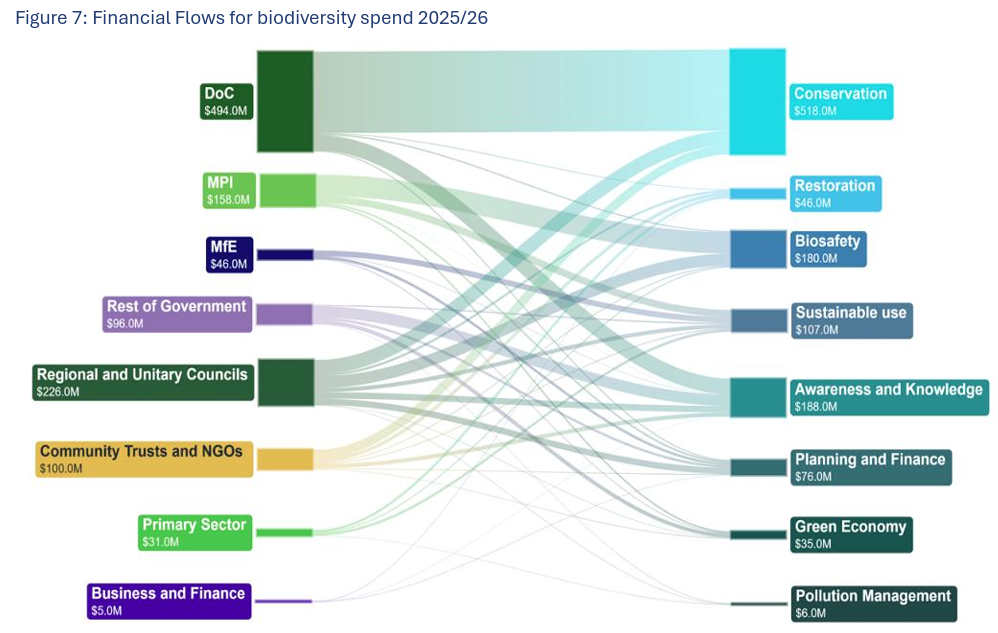
Biodiversity finance has fallen in both public and private sectors [between 2023/24 and 2025/26] despite economic growth. If investment had kept pace at 0.28% of GDP, it would have risen by $80m but instead dropped by $28m... New Zealand’s spending on biodiversity declined from $1,182 million in 2023/24 to $1,154 million in 2025/26.
The BIOFIN Biodiversity Expenditure Review Baseline (BER) is New Zealand’s combined public and private biodiversity spend as a share of GDP. In 2023/24 the Biodiversity Investment Ratio (BIR) baseline was 0.28%. In 2025/26 it decreased to 0.26%. New Zealand households spend more on cosmetics.
Volunteer hours are estimated to be worth $49m per annum... A $30 per hourly rate was used to value over 1.25 million hours for conservation, restoration, and biosecurity at $38m, and biodiversity awareness, planning, and sustainable use at $11m, totalling $49m in volunteer hours. This is highly likely to be an underestimate due to many voluntary hours going unrecorded.
The Sankey chart below on financial flows provides an overview of who is paying for what. Note that business and finance (only 1% of total biodiversity financing) is likely an underestimate, because of the lack of data in the sector, plus contributions to NGOs are counted in that sector.
Next steps for the BIOFIN process are the Financial Needs Assessment and Biodiversity Finance Plan. Watch this space.
Speaking of BIOFIN, Toha Network recently participated in a BIOFIN webinar on nature markets, represented by co-founders Nathalie Whitaker and myself. You can access the recording below:
Also speaking on the BIOFIN webinar were our friends from bloomlabs, presenting data on global nature markets from their newly launched Bloom 2.0 database.
For a while, the MAHI transaction at Te Kautuku in late 2024, facilitated by Toha Network's digital infrastructure, was the world's largest single transaction. That is now overtaken by cumulative sales at Sanctuary Mountain Maungatautari through Ekos's BioCredita programme, which is a magnificent achievement.
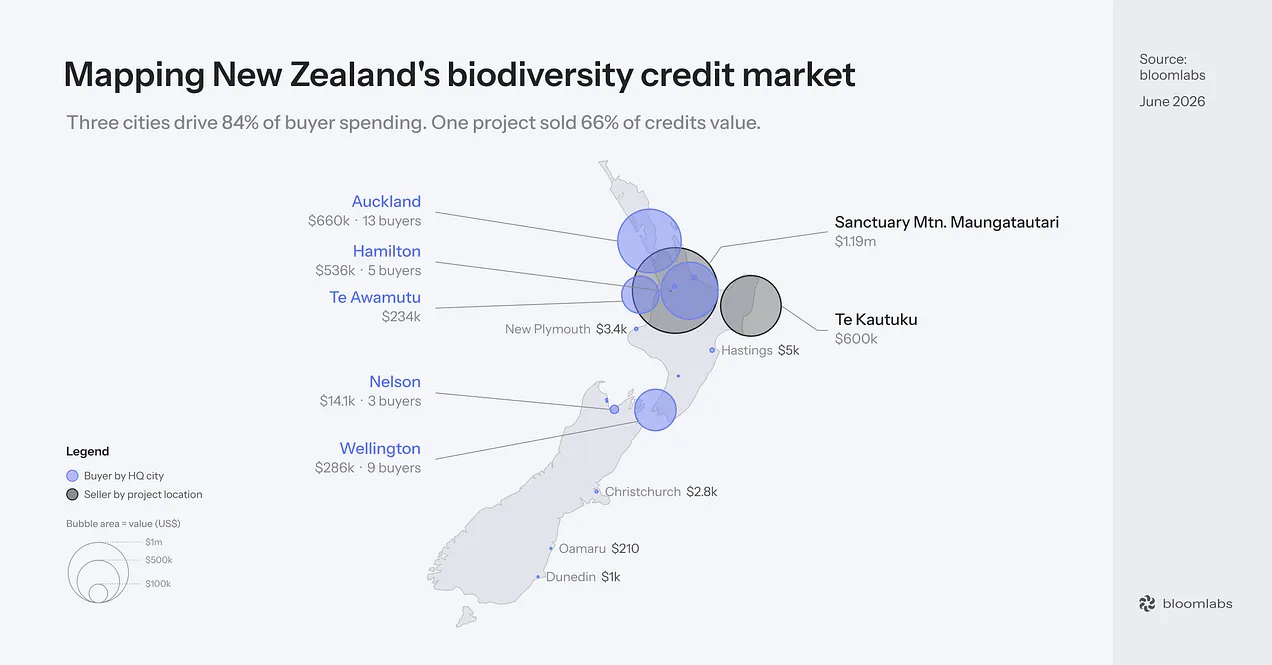
However, the predominance of a couple of major transactions is characteristic of the nascent state of this market. As the chart below shows, global deal flow is still fairly chunky, dominated by pilot and demonstration transactions. The success of New Zealand pilots, where project costs are very high by global standards, further contributes to the spikiness. Regular deal flow is still small beans.
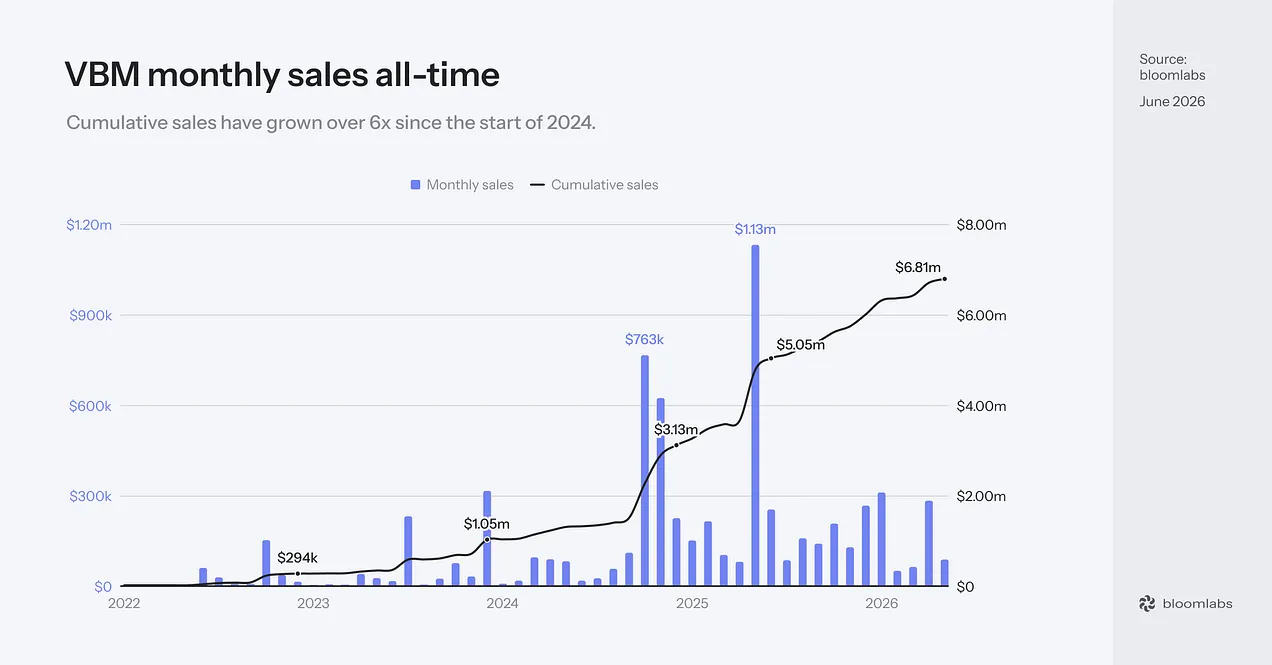
Read the rest of the update, including further detail on New Zealand's market leadership, via the link below:
 Martin Vaquié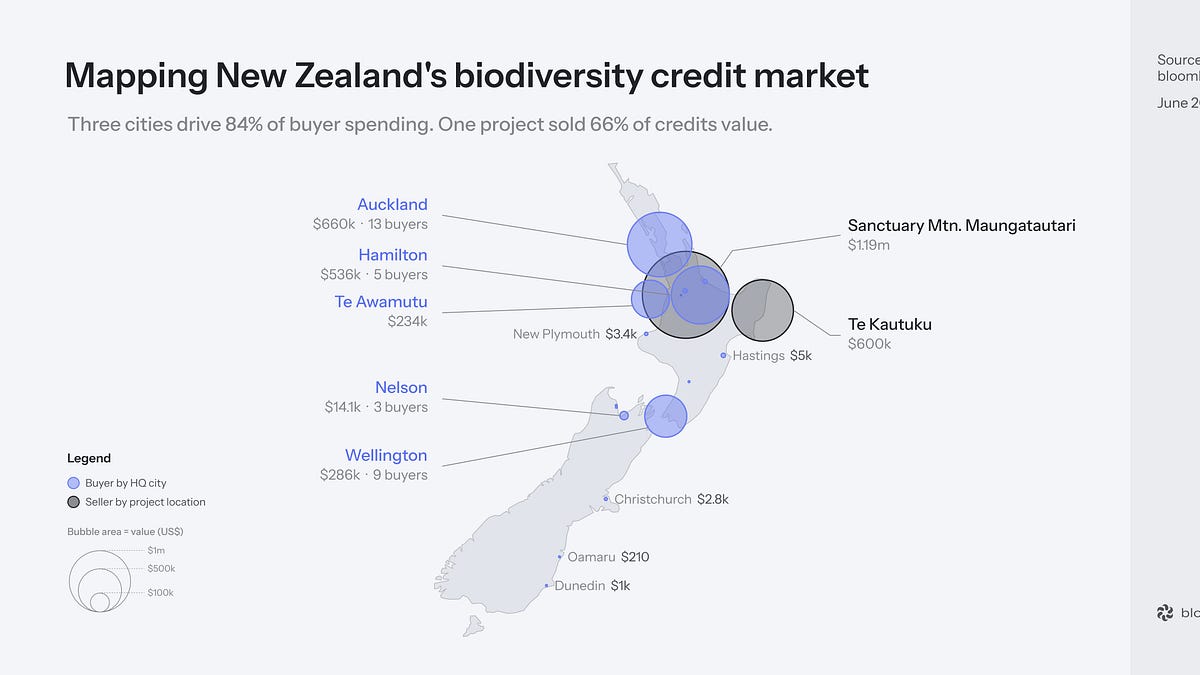
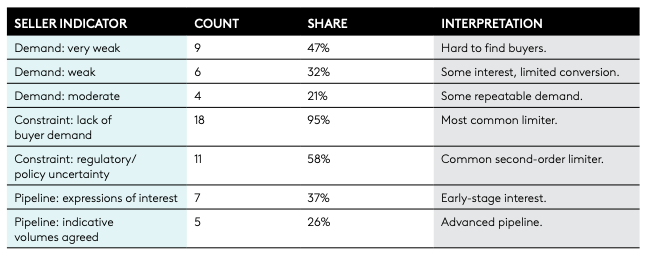
Further insights into the 'state of the market' is available by the report published this month by Pollination (with research support from bloomlabs). Its survey on seller perceptions is stark: most respondents (79%) described demand as weak or very weak.
I have long had a gripe that the nature finance narrative has overcommitted on biodiversity credits. This is not to say that biodiversity credits cannot, or should not, play a role in nature-positive transitions. It is to say, rather, that biodiversity credits are burdened with an excessive prominence while markets are immature, dominated by pilot-scale transactions, with continued uncertainty over the nature of future market demand.
Meanwhile, there are various channels for scalable nature finance that exist in the mainstream already, but do not receive significant attention or regulatory oversight. This includes sustainable debt instruments, venture capital, supply chain enhancements, transition planning and nature-related target-setting. (Indeed, Toha Network is not even a seller of biodiversity credits: as I explain in the BIOFIN webinar, we are a digital infrastructure developer that sells access to nature data for all these purposes.) The need for a wider perspective of nature finance is vital – and brilliantly articulated in this note by sustainable finance practitioner Peter Rowan:
 Peter Rowan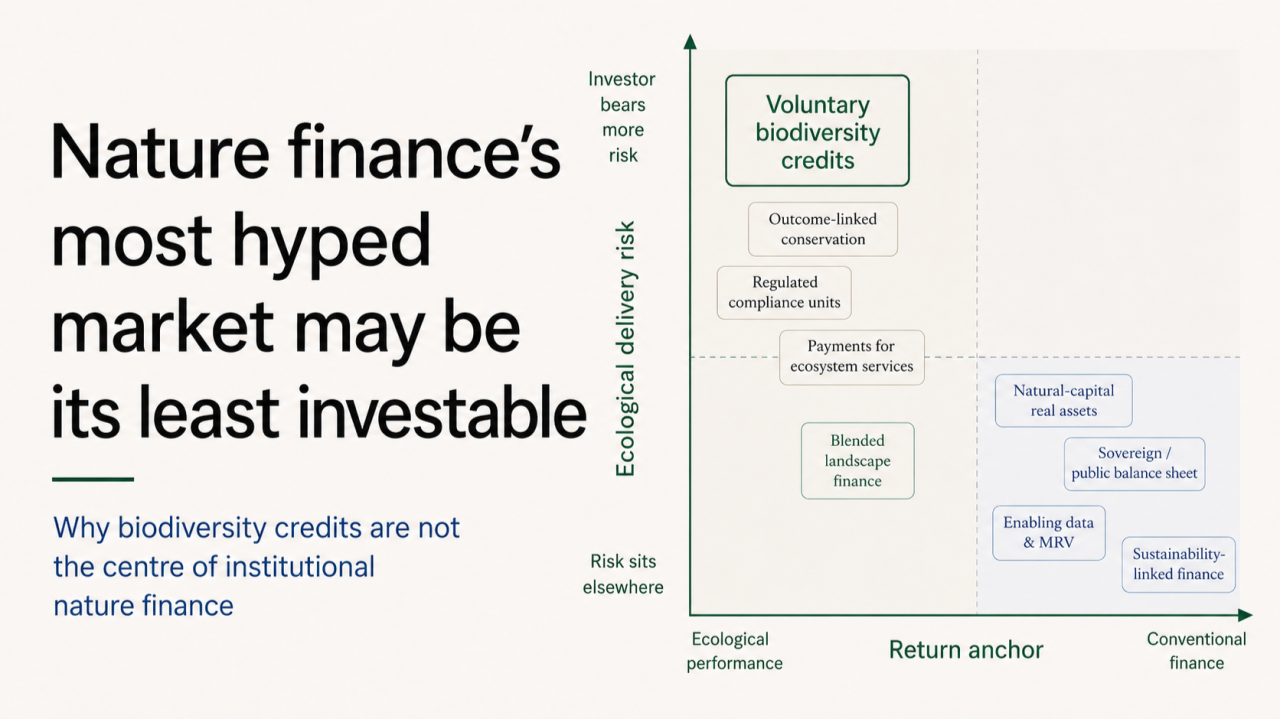
A new Nature article published this month attempts to 'demystify biodiversity finance' by reviewing the return-seeking instruments for conservation that go beyond credits. The instruments are summarised in the pie chart below.
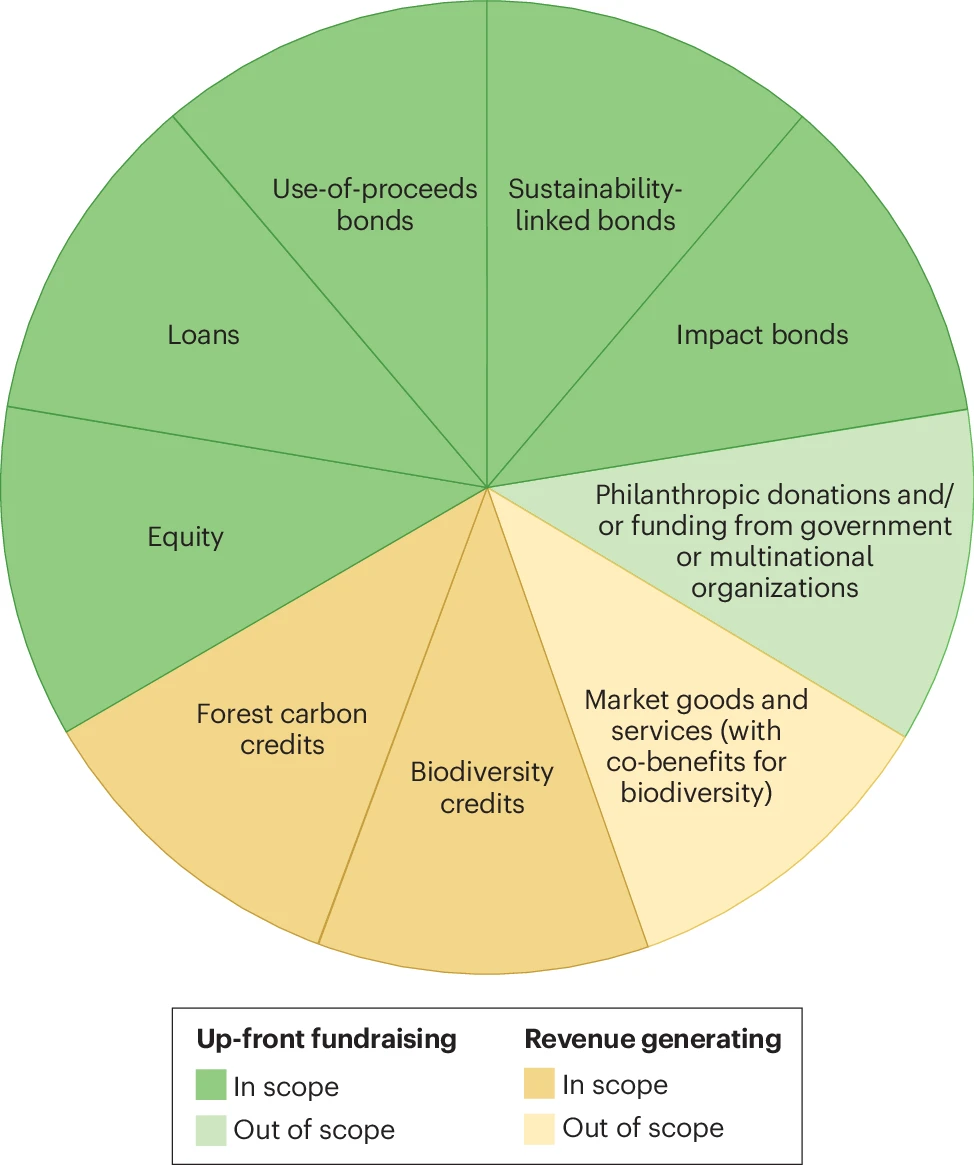
The article is fairly tempered in its expectations for biodiversity finance:
Although private finance has a role in funding conservation and restoration activities to achieve biodiversity goals, public investment and philanthropy will remain crucial within the biodiversity finance landscape even as new mechanisms are being developed.
For what it's worth, I drew similar conclusions when I co-authored a report on biodiversity financing five years ago for the Biological Heritage National Science Challenge. There were viable innovation opportunities in debt and equity instruments, but we concluded that 'systems change will be essential to scale up
biodiversity investment'. In particular, we argued that 'a biodiversity
payment would be the single most influential lever' because it would create the revenue flow that nature-positive projects often lack. We proposed a Biodiversity Reparations Scheme which, drawing on the concept of environmental footprint tax, would impose a levy on high-intensity land uses and hypothecate the revenue into a fund for nature-based solutions. These transfers would provide the cashflow for project developers to repay debt, or reward dividends, thus meeting the risk and return requirements of scale finance.


The role of public policy in funding and financing nature must not be neglected. There remains a justified suspicion that (over)promising on biodiversity credit markets is an evasion of urgent questions of regulation and public investment. Relatedly, the faith in spontaneous emergence of voluntary nature markets is a distraction from the role of governments to stimulate, or even compel, demand for such products.
A new article for Policy Quarterly by Marie Doole, Suzie Greenhalgh, Susan Walker and Robyn Simcock makes this type of argument. They argue that high-integrity biodiversity credit markets require governments to invest into three focus areas: (1) maintenance of existing public investment which biodiversity credits are additional to; (2) procurement and maintenance of underlying spatial and ecological data to support quality decision making; and (3) risk management of bad actors and fraudulent claims.
In conclusion, they write:
While public spending on experimentation, knowledge exchange and promotion of the concept of biodiversity credits may be legitimate, governments also have broader responsibilities to manage the system-level consequences where they are adverse for biodiversity and communities. Those two, somewhat competing, roles need strategic balancing to ensure that the wider public interest in a healthy environment is not compromised by an imbalance in public investment that promotes the concept of a biodiversity credit market without adequately safeguarding against its well-understood risks.
 image/svg+xml
So, turning to a wider view of nature finance, what might help to activate greater investment across a portfolio of nature finance instruments?
One critical barrier is the state of nature data. This was reinforced by a recent report by the Leveraging Earth Observation for Nature Finance (LEON) project, which examined how Earth Observation (EO) data can support the mobilisation and scaling of nature finance. Through interviews with banks, asset managers, NGOs, advisory firms and international organisations, the report found that engagement with a wide range of instruments, including green and sustainability bonds, investments into sustainable agriculture and forestry, carbon markets, sovereign green bonds, development aid, government grants and subsidies, nature-based insurance and debt-for-nature swaps.
These all have data requirements for tracking funding flows and outcomes. Yet the major barriers to nature data were the lack of standardised metrics and taxonomies, data gaps particularly in emerging markets, insufficient asset-level geolocation data, and restricted availability of existing data.
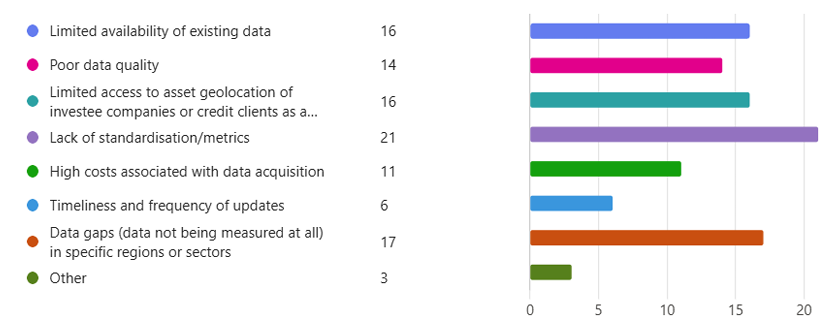
More broadly, the survey found that the main barriers to managing nature-related risks and barriers were not just the data-related barriers, but also the insufficiency of policy and regulation to stimulate action.
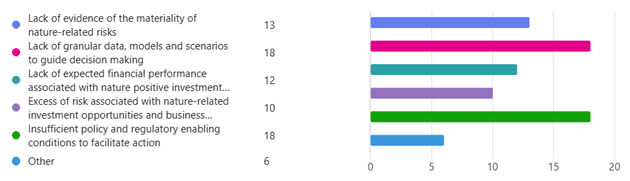
For more on this research project, follow the link below:
 Nicola Ranger
This pre-print paper on nature-positive supply chains shows how nature data gaps result in the obscuring of biodiversity impacts. The study examines the coffee supply chain to the University of Oxford, where most of the researchers are affiliated. Each step along the supply chain (see the graphic below) results in a progressive loss of traceability and transparency, until the ability to access data on the coffee's provenance and attributes is winnowed away to the very improbable.
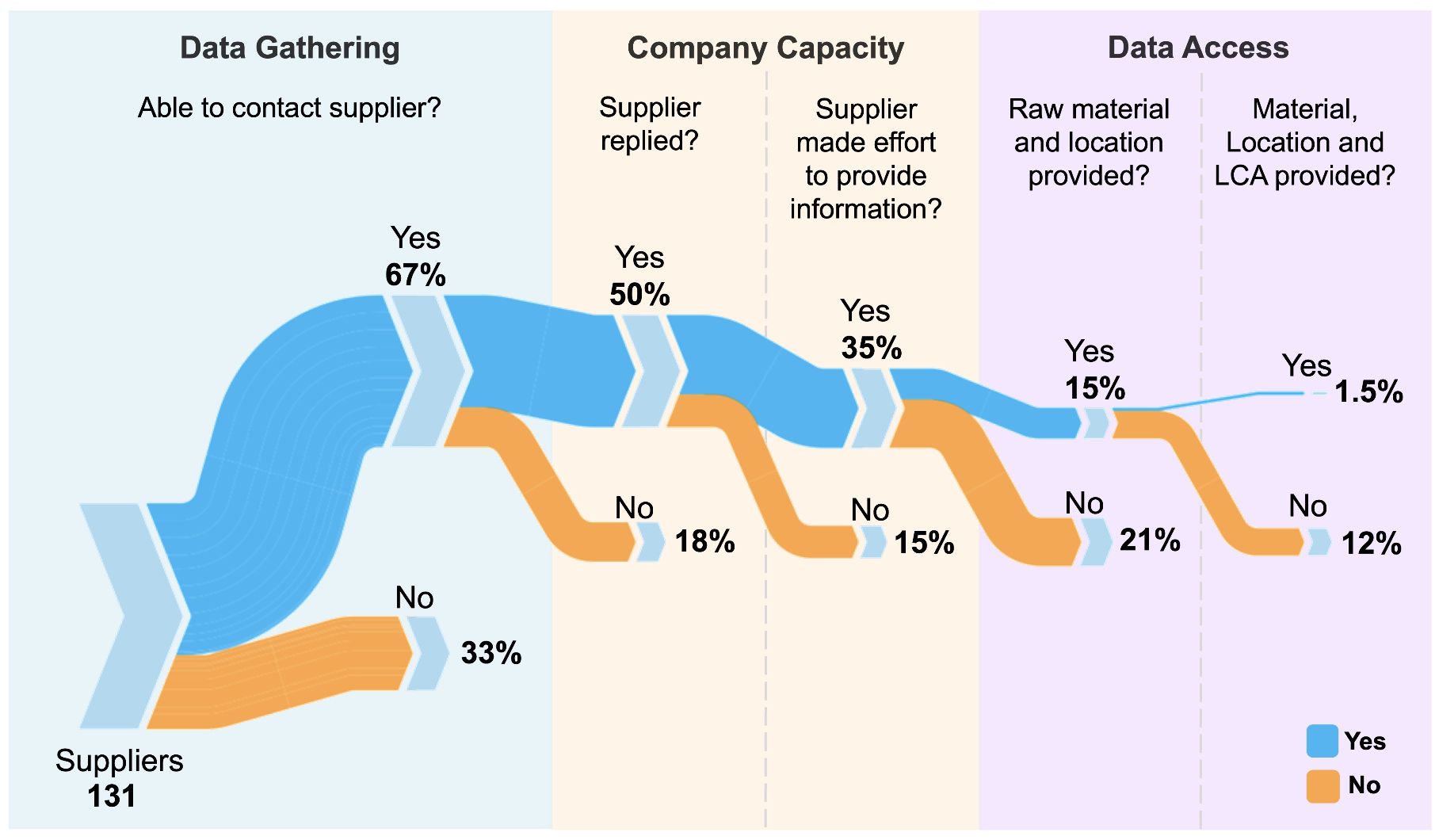
In case you missed it, the Taskforce for Nature-related Financial Disclosures (TNFD) released a report late last year, which made recommendations on improving the global nature data value chain.
To address the lack of standardization in nature data markets, the TNFD recommended a set of data principles to bring coherence and comparability to nature data.
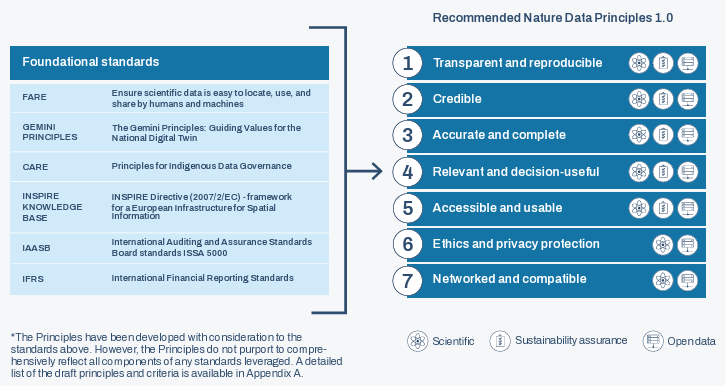
They also piloted the data principles with a number of data providers, including the Toha Network. Interestingly, the principles the pilot cohort were least aligned to were on ethics and privacy; specifically, those sub-principles related to free, prior and informed consent for data collection (6.1), impact assessment for Indigenous peoples and local communities (6.2) and disclosure of legal rights and licensing terms (6.3). These were the principles most clearly derived from the CARE principles for Indigenous data sovereignty
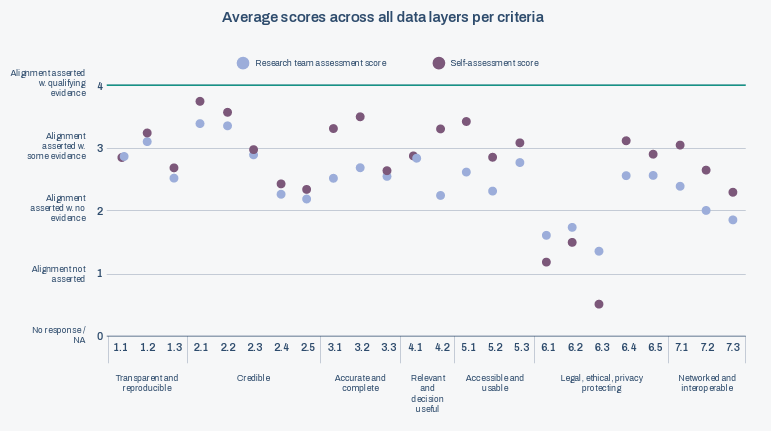
Given that many participants in TNFD's pilot programme collected or utilised Earth Observational (EO) data, this lack of connection to people on the ground was hardly surprising. EO data collection is top-down in the truest sense, captured by satellites, covering the entirety of the planet. This differs from the ground-up approach which Toha Network is piloting, which works with project-sized land parcels and secures consent from the outset. As we argued in our submission to TNFD's pilot process, the opportunity over time is for these approaches to 'meet in the middle', to connect consent and benefit-sharing with remote sensing technologies that increasingly occur at a distance from frontline communities.
I was part of the panel discussion in São Paulo to launch the TNFD's recommendations, which touched on the issue of IDSov; you can watch this here:
This touches on the issue of how to responsibly and respectfully manage the data of Indigenous peoples, local communities and Afro-descendant peoples. This is an unavoidable issue given that Indigenous peoples manage or hold tenure rights to about one-quarter of Earth’s land surface, which contain a large share of critical ecosystems, including 37% of remaining natural lands worldwide and one-third of the planet’s intact forest landscapes.
The International Sustainability Standards Board (ISSB) is currently considering whether companies should disclose information about their engagement with Indigenous Peoples and local communities in relation to nature-related risks and opportunities. In doing so, they commissioned the Shift Report on Community Engagement, Nature and Financial Materiality, published this month. It concludes:
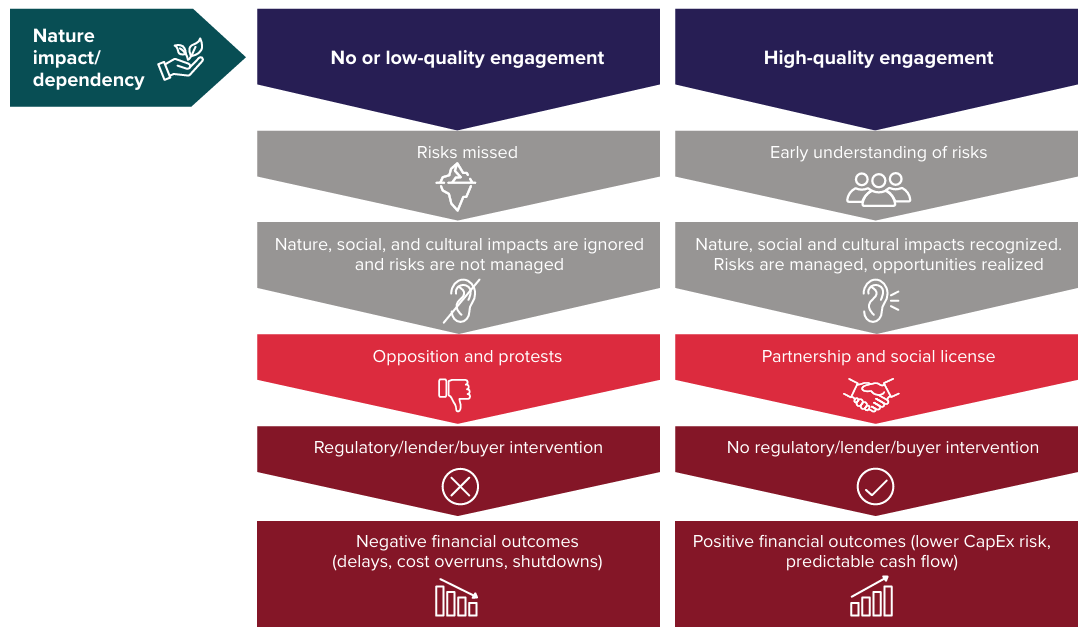
Our research finds clear evidence that community opposition can have significant financial effects. These effects are most visible where conflict causes operational disruption, delay, suspension, or abandonment, but they also extend to legal and regulatory costs, reputational damage, reduced market access, increased costs of capital, investor or buyer withdrawal, and the diversion of staff and management time... Community conflict can lead to losses in the millions or billions, as well as impacts on reputation, access to capital, staff morale, and opportunity costs.
The recommendation is to engage well and engage early (see the graphic below), a lesson which is no less important for nature-positive projects than resource extraction projects. Ensuring that consent flows through project planning – from the planned activities to the use and reuse of data – is critical to success.
 Francesca de Meillac
As a reminder of the weightiness of biodiversity decline, this new analysis of 'critical natural systems as macro-critical infrastructure' is bracing.
The paper makes the case for nature as analogous to national critical infrastructure (an argument that I'm not unfamiliar with). But it then goes on to extend that analogy to macroeconomic policy, arguing that we should treat Global Systemically Important Natural Systems (GSINS) like we treat Global Systemically Important Banks (G-SIBs): 'as too big (or too important) to fail'.
This new concept of GSINS might be used, from an actuarial perspective, to justify the investment required to avoid the catastrophic losses of ecological collapse. These costs are significant:
Our findings suggest that over US$1 trillion of annual GDP in China, Europe and the USA depends on forest-linked rainfall, so called ‘green water’. Across more than 130 countries, we estimate direct economic dependencies on ‘green water’ alone exceeding US$5 trillion and upstream supply-chain dependencies of almost US$3 trillion.
Nicola Ranger
Finally, if you are coming to the annual Environmental Defence Society (EDS) conference this week on 24–25 June 2026, come along and say hi. I will be hosting a screening of the Nature Positive Initiative's new film, Becoming Nature Positive, at lunchtime on the second day (Thursday 25 June at 1pm). If you haven't registered for the conference yet, it's not too late to do so here: https://edsconference.com/
Thanks for reading this far! If you haven't already, please subscribe to receive future content like this, as well as essays and transition-related briefings.