

In this week's edition of The Pointillist, a scattershot of articles and ideas from across climate mitigation and adaptation, including a UNEP update on the 1.5°C goal, the perversity of LNG imports in the context of global technology trends, the geopolitics of the terrible floods in Nepal, and the paradigm change occurring in climate mitigation policy.
(Apologies for the long gap between posts, but the day job – for all the right reasons – has been all-encompassing of late.)
First up, a big new report from United Nations Environment Programme (UNEP) on 'limiting overshoot'. It reinforces the view that humanity is destined to exceed the 1.5°C. Even the most optimistic scenario – which assumes countries meet all their pledges and net-zero targets – puts expected peak temperature rise at 1.8°C.
This is old news for those who follow climate action closely, but the UNEP report makes many other important arguments too. Contrary to those fatalists who argue that we should abandon mitigation and advance adaptation only, the report makes the case for treating mitigation and adaptation as interdependent and mutually reinforcing (see the diagram below).
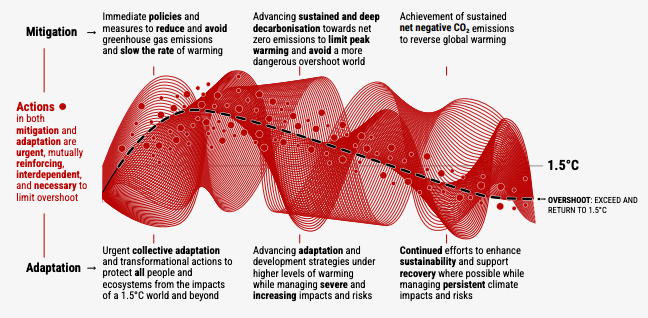
Mitigation contributes to adaptation, because it means we need to adapt to less worse circumstances than we might have. Many mitigation strategies can also improve resilience, such as trees in vulnerable catchments, or distributed generation technologies (e.g. rooftop solar and batteries).
On the flipside, adaptation can contribute to mitigation. For instance, a climate-resilient forest will store carbon more securely and therefore contribute more to mitigation. Similarly, a community that is well-adapted to climate-related shocks is less prone to financial stress, and therefore retains its capacity to invest the time and money into decarbonization.
So the either/or framing of 'mitigation or adaptation?' is an exceptionally silly one. The smart question is which activities are complementary to both mitigation and adaptation, and which activities contribute to one while undermining the other.
 UN Environment
Alas, we are not free from silliness when it comes to public debate on climate action...
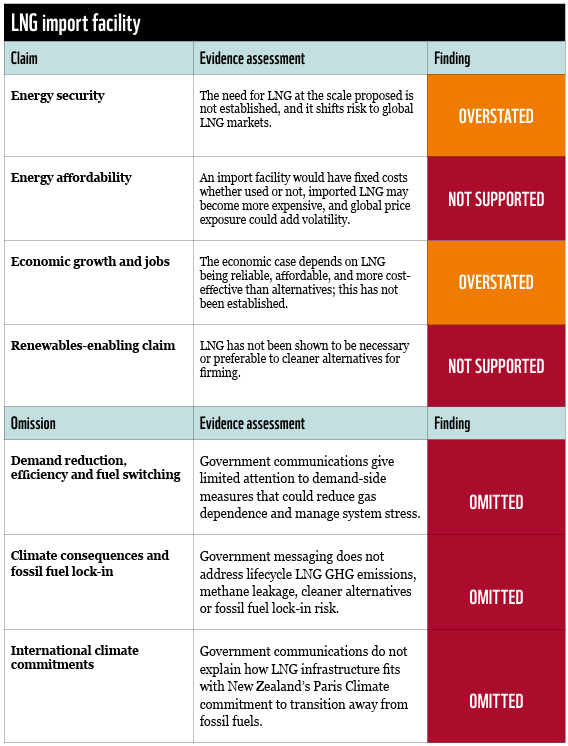
WWF-NZ just released a report, Keeping the Lights On?, which dissects the arguments put forth for the LNG import facility, as well as the resumption of offshore oil and gas exploration. There is an element of 'he said, she said' to this type of critique, but the manifest shortcomings in the case for LNG imports (see the table below) do help to explain why the proposal is so unloved.
Another common canard among climate obstructionists is to say 'Why should we do anything when China's emissions are hurtling upwards?'
For instance, in a February 2026 op-ed titled, 'New Zealand should ditch Paris payments and focus on climate adaptation', Matthew Hooton argued: 'On climate change, the great polluters [including China] have all decided not to fight.'
Ahem...
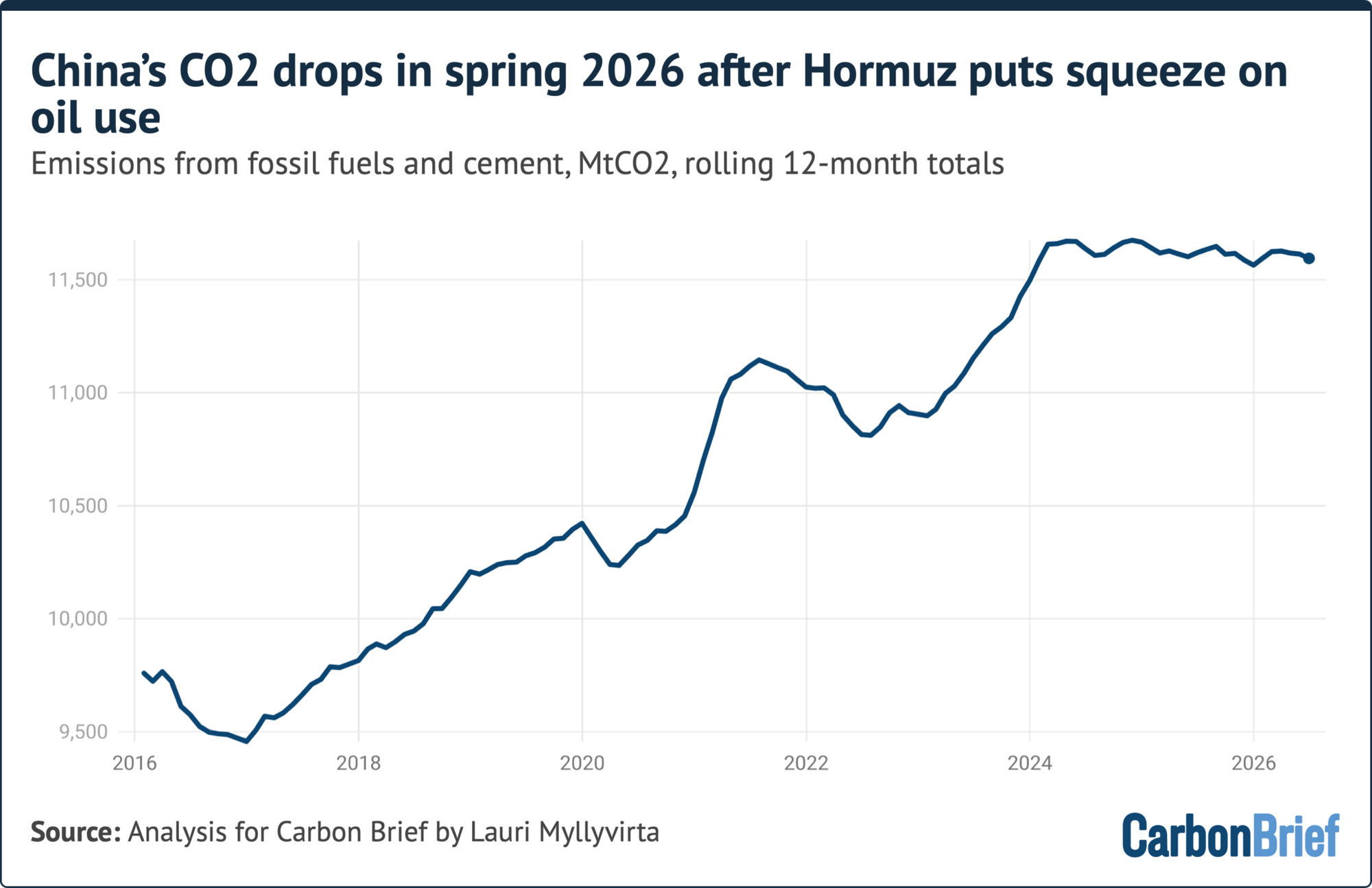
 Lauri Myllyvirta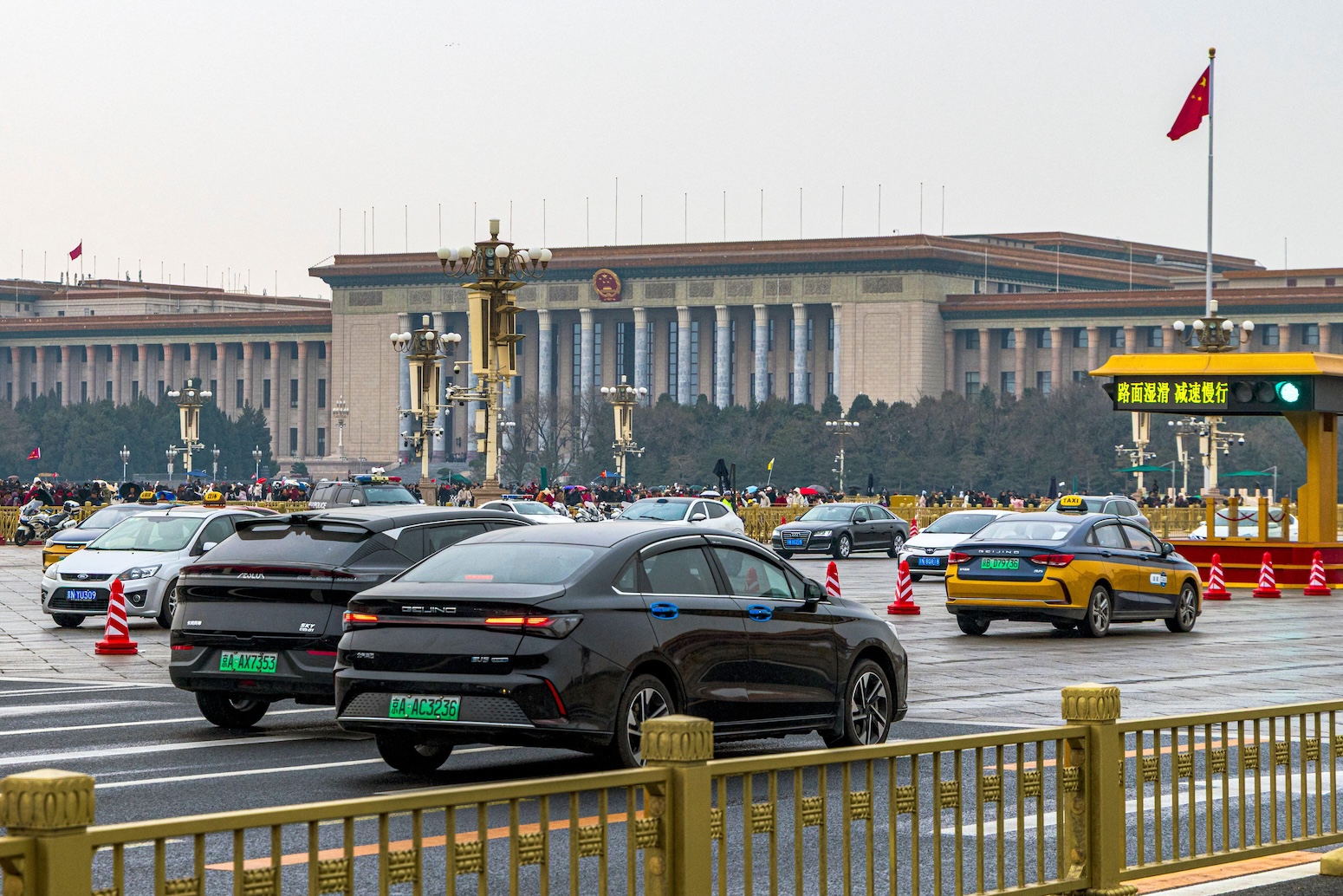
Also, just because EV uptake is slow in New Zealand, that does not mean it is slow everywhere. Over the last five years, EV uptake has accelerated in many countries (see the chart below), including some developing countries like Nepal and Viet Nam. This is being driven by neighbouring China, which is shifting EV stocks and manufacturing capacity into developing and emerging economies, while also getting high on its own supply (more than half of all Chinese car sales are now electric).
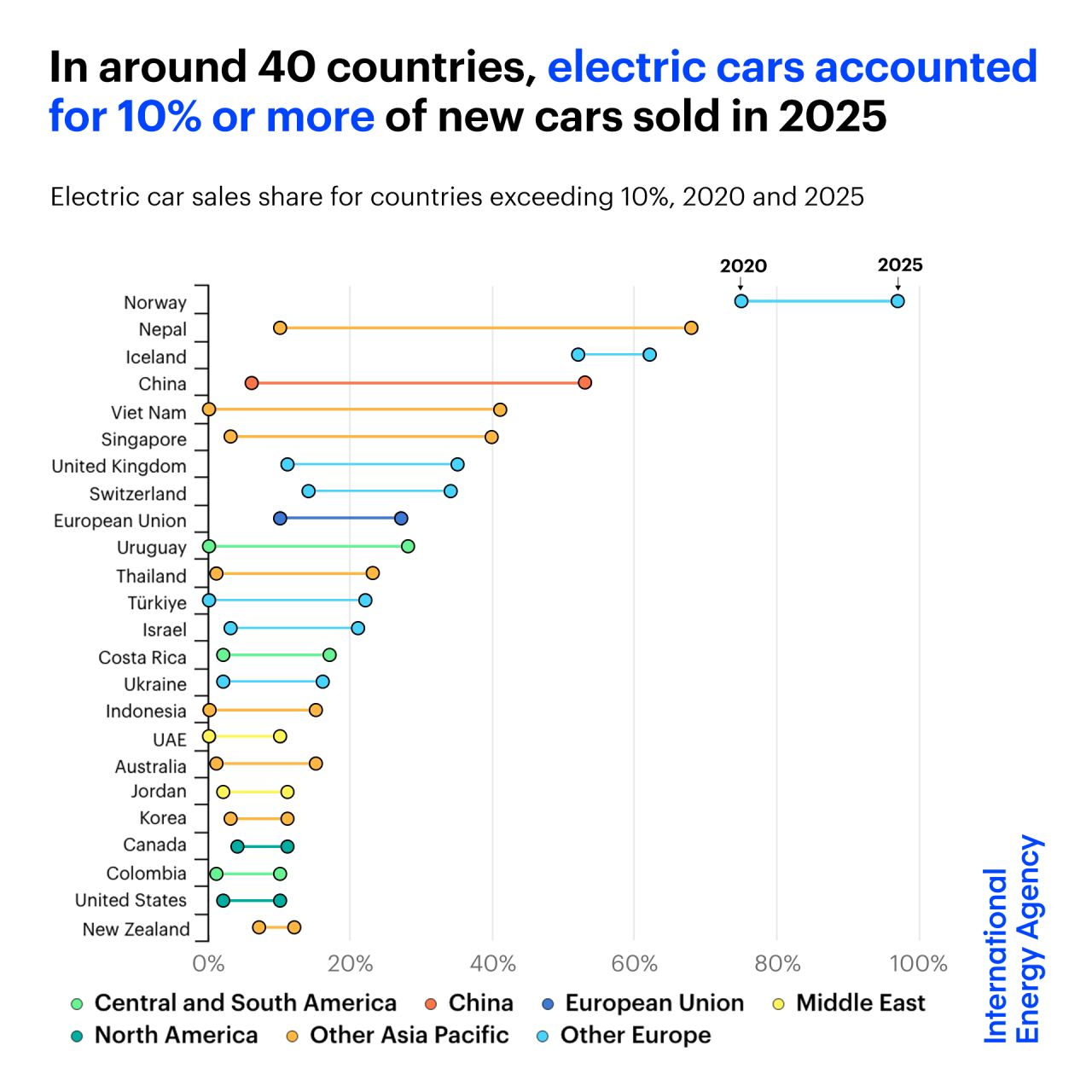
These trends cut against the patronizing assumption that once prevailed in global climate policy: that clean technology would be spearheaded by developed countries, eventually trickling down to developing countries. This is wrong, and it's a good thing it is wrong, because these less-emissions-intensive development pathways are humanity's best chance for avoiding the worst-case scenarios of climate change.
Nepal's extraordinary conversion of its vehicle fleet – from about 10% to 70% electric in five years – is all the more poignant in light of the tragic flash flood it suffered recently. The risks of such events are multiplied by global warming, which is causing glacial retreat and loss of permafrost. It is an example of a country that contributes least to the problem of climate change, yet finds itself highly exposed to its traumas.
Nepal's immediate demands for compensation for loss and damages are reminiscent of the geopolitical tensions that Kim Stanley Robinson anticipates in his cli-fi novel, The Ministry for the Future. The story begins with a devastating heatwave that catalyses a messy reorganisation of climate politics globally, where developing countries do what they must to avert further climate-related disasters.
But the constraints of the present are exposed in this vital but gloomy essay from Phenomenal World, which explains how the global financial system is compounding the effects of climate-related shocks:
Nepal had been expected to see a growth rebound to 5 percent next year, according to the Asian Development Bank, but that is no longer on the horizon. The latest disaster makes it more likely that it will join the ranks of countries like Bangladesh and Dominica, where persistent climate disaster intertwined with financial subordination invites capital discipline rather than increased aid and social spending. The lack of reform in the global financial system amid these rolling disasters—setting off doom loops that tighten finance and investment in both rich and poor countries—makes funding recovery, let alone prevention, seem increasingly out of reach.
 Kate Mackenzie
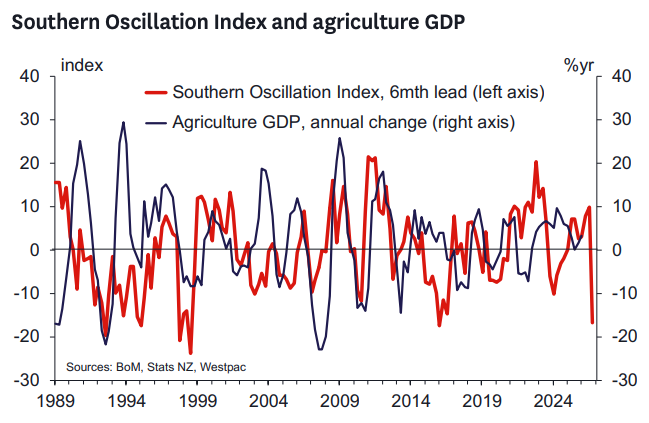
Of course, the costly fires in Europe this summer show that developed countries are far from immune, upending another lazy assumption about climate change. With this in mind, this Westpac report is worth reading on the potential impacts of the forthcoming El Niño. Past severe droughts have subtracted as much as 1 percentage point from GDP growth, and also elevated inflation. But the authors emphasise there are many factors in play, including the ways that farmers are adapting to climatic change.
 Michael Gordon and Paul Clark
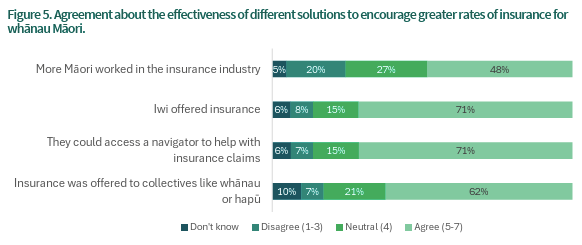
A new report on insurance coverage for Māori, led by one of Aotearoa's sharpest political scientists, Dr. Lara Greaves. Published by the Financial Markets Authority (FMA), the report digs into why Māori have lower rates of insurance, which reduces the ability to transfer the risk of hazards and other events. Beyond financial constraints, the major issues are trust and misrecognition (see the chart below).

Unsurprisingly, survey respondents tend to lean toward self-determination as the solution – such as iwi-led insurance schemes, collective insurance at the whānau or hapū-level, or navigator approaches like Whānau Ora.
Voluntary carbon markets (VCM) remain in an ambivalent space, not helped by its legacy of hype and overreach. This makes impartial, data-led analysis all the more valuable, such as this new working paper by Florian Berg et al. Exploring price dynamics in the VCM, the research finds an extraordinary variance among voluntary carbon projects: ‘transaction prices vary by more than two orders of magnitude—from a few cents to over one hundred dollars per ton of CO2.’ To use the economists' lingo, this is a symptom of heterogeneity: VCM credits are priced as heterogeneous goods that reflect diverse risks and varying qualities, not as a homogeneous commodity in which one ton of CO2 abated has a single market price.
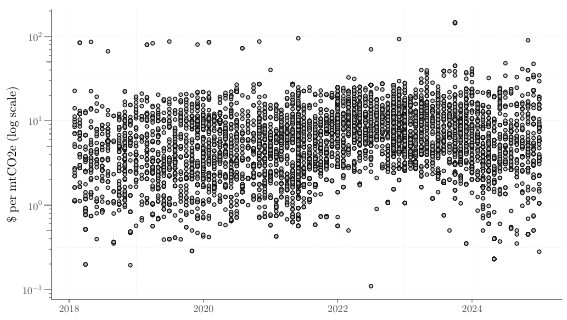
The paper concludes:
We show that the VCM does not price carbon as a commodity. Instead, prices exhibit extreme dispersion and reflect project, buyer, and individual-transaction characteristics rather than a common value for emission reductions. Buyers pay premia for project attributes beyond expected emission reductions. As a result, voluntary carbon market prices do not provide a market-based carbon price signal. Our framework attributes VCM price patterns to two channels: buyer preferences over noncarbon project features and dealer price discrimination across buyers. The preference channel suggests VCM credits function more as differentiated certificates of voluntary corporate climate engagement, with benefits beyond climate mitigation, than as interchangeable units of carbon abatement.
If I can try to translate that into plainer language: Voluntary carbon credits reflect what companies are willing to pay to look good on climate change, not what they should pay in a well-functioning market that reflects real costs and scarcity.
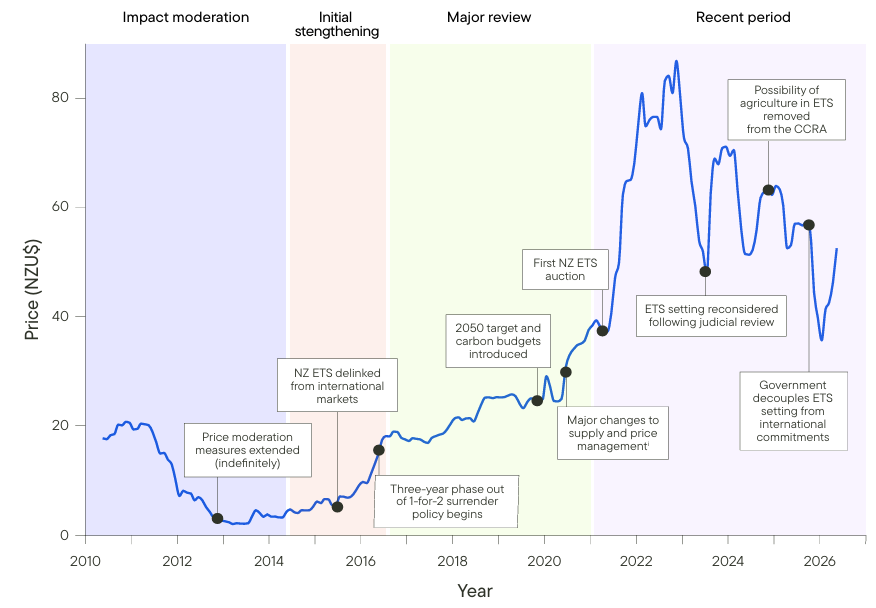
It would be nice to think that compliance carbon markets could do what voluntary carbon markets can't. But compliance markets rely upon the resolve of regulators. In a democratic system like New Zealand's, this means that emissions pricing is exposed to the political calculations of the executive, including the need to win elections in tight economic circumstances. Imposing a price on emissions, especially one that gets close to actually reflecting the costs of climate-related damages, is a hard ask.
This is manifest in a new report by the Parliamentary Commissioner for the Environment (PCE) on New Zealand's compliance carbon market: the Emissions Trading Scheme (ETS). The chart below shows the way that price is sensitive to signals from the government of the day, which affect market confidence about future unit prices.
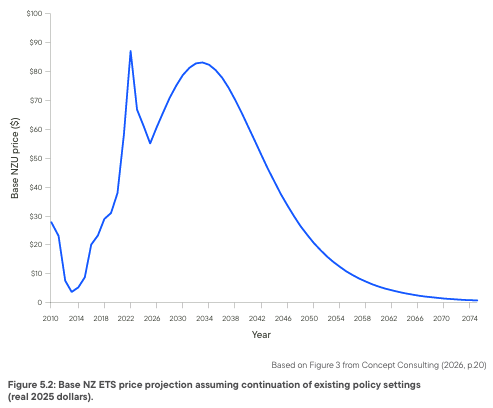
Lots to chew on, but the most important chart for policy expectations is the one below, which shows future price projections under business-as-usual assumptions. The price of New Zealand Units (NZUs) is expected to increase to reflect the tight market over the short-term, then eventually to collapse beyond the mid-2030s because unit demand relaxes (i.e. the economy is decarbonizing) while unit supply loosens (i.e. carbon forests are growing).
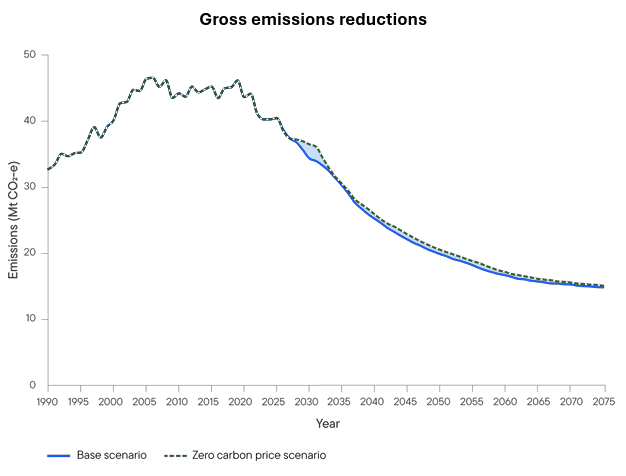
As a result of unit oversupply, the future impact of an unreformed ETS is negligible. It contributes only 4% more emissions reductions by 2050 than a scenario where the carbon price is zero (see the chart below). What really does the work is technology change, largely driven by the policy choices of other countries, as well as uptake policies here.
The ETS could be more effective than it currently is, but this will require a major restructure, including significant changes to forestry's role. This is likely to trigger robust pushback from economic interest groups, including Māori forest owners who have genuine claims of unjust treatment throughout the development of the ETS. Meanwhile, the political rewards for rationalising the ETS are minimal: it is a highly complex policy instrument that most voters are scarcely aware of, and even fewer understand. This is why the PCE's choice of the report's title, Adrift, is so appropriate to describe ETS politics, because wallowing in underperformance is the path of least resistance for regulators.
 NV Interactive (https://www.nvinteractive.com/)
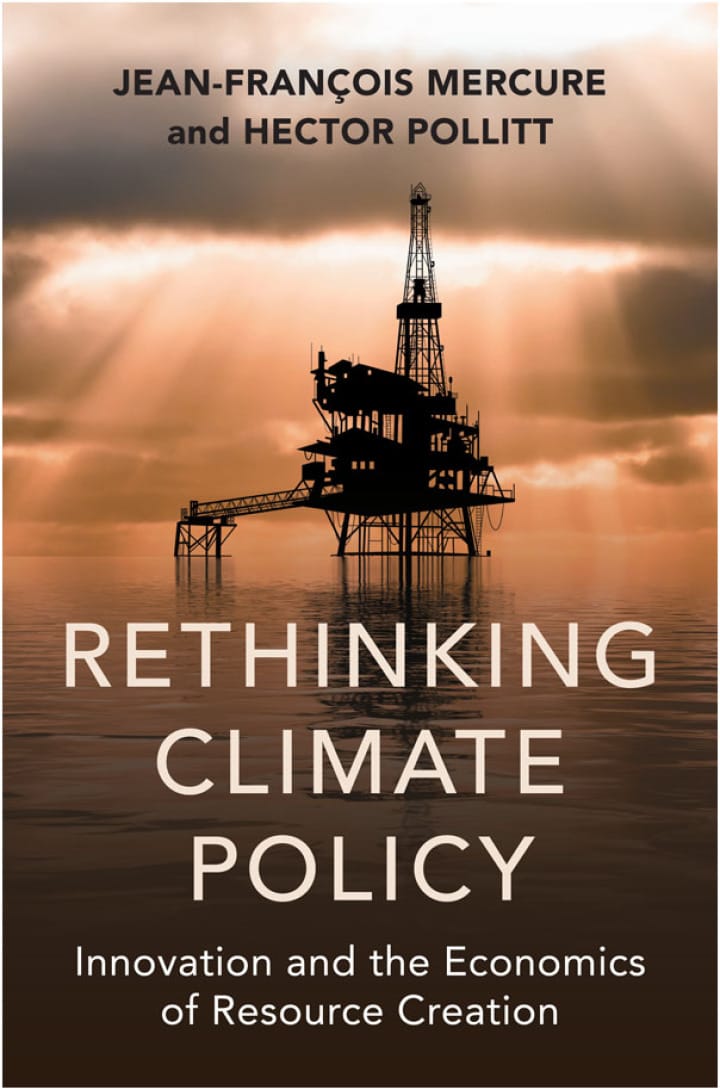
The PCE report is symptomatic of a growing reappraisal of climate policy and its effectiveness. I am reading a new book, Rethinking Climate Policy, by economists Jean-François Mercure and Hector Pollitt (both formerly at the World Bank) which brings together many of the most powerful, evidence-based arguments for a paradigm change in climate economics and policy. I am likely to return to this book in future newsletters, but the basic argument is that we've spend far too much effort trying to price emissions, and not enough effort trying to stimulate innovation and zero-emissions technology. Where we've done the former, there is not enough to show for it; where we've done the latter, the pay-off is far greater than conventional economists had ever dared to anticipate.
For my own writing on this topic, I recommend this 2024 essay on policy mixes, which starts like this:
Have you heard the joke about the lost tourist in the Irish countryside who asks a local for the way to Dublin? After considering the matter for a moment, the local answers: ‘Well, if I were you, I wouldn’t start from here.’ This also feels like the right way to think about New Zealand’s climate mitigation policy. If we are to take a step back, to honestly take stock of present circumstances – for instance, recent developments in clean technologies, new insights into policy evaluation, the evolution of actual (as opposed to theoretical) carbon markets, international ambition on target setting, the emboldened social licence for climate action – we might well wonder whether we would start with the policy framework we have. It is a product of circumstances that are many years, even decades, old – going back to a time when carbon budgets were not nearly depleted, when clean technology seemed out of reach, when climate change was distant to most people’s thoughts and fears. Does it make sense to carry on, given what we now know? Or should we take a step back and ask ourselves, honestly, is our policy pathway consistent with our aims? Policymakers are rarely afforded – nor afford themselves – this opportunity to reflect. There are, of course, many causes for this: path dependencies, personal legacies, the fallacy of sunk costs, and the frenetic pace and reactive style of contemporary policymaking. But it is also a consequence of the tragedy in the joke: we are where we are, which is not always where we ought to be. Starting from somewhere else is, if not impossible, then often inadvisable, because retracing our steps is wasted time and energy. We must press on from wherever we happen to be – and yet it would be foolish to do so without understanding how we went astray. If we do not, we may reproduce our mistakes, misbeliefs and misjudgements. Once again, we might find ourselves lost in the countryside, asking for help from strangers and tricksters.
 Authors David Hall Auckland University of Technology https://orcid.org/0000-0001-7453-2403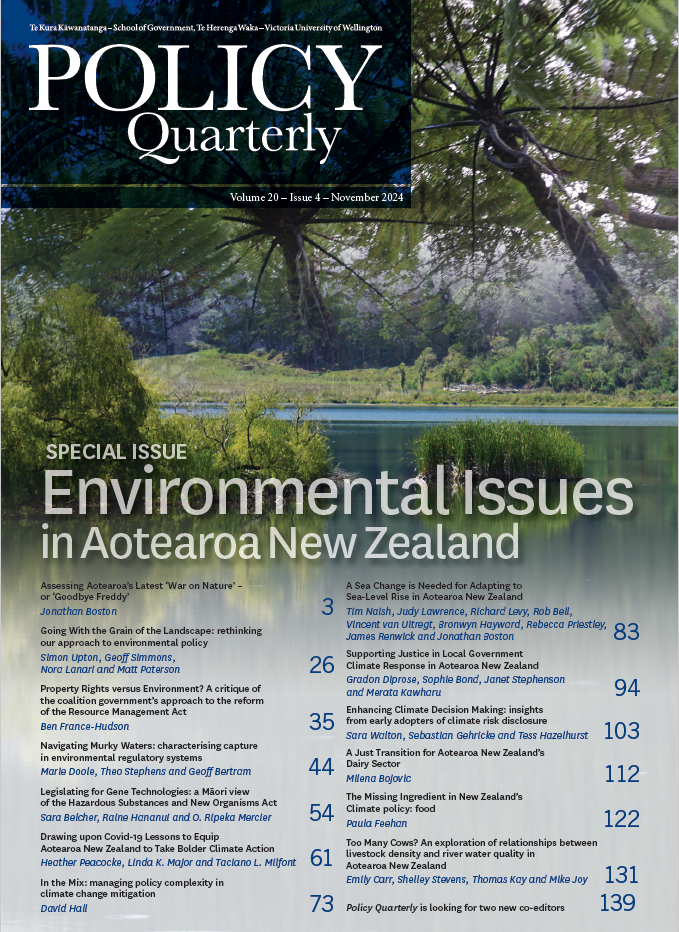
Thanks for reading this far! If you haven't already, please subscribe to receive future content like this, as well as essays and transition-related briefings.