

These are my reflections on the Seventeenth meeting of the Conference of the Parties to the Convention on Biological Diversity (COP 17), which I recently attended in Yerevan, Armenia. This builds on past reports from COP 16 in Cali, Colombia, and COP 31 in Belém, Brazil. All monetary amounts below are in USD.
The UN Biodiversity Conference (COP 17) is over—with a squeak rather than a roar.
From October 19–30, a lot of well-intentioned people gathered together in Yerevan, Armenia. They talked through solutions to biodiversity loss that might survive the constraints of fiscal discipline, geopolitical stress and anti-wokeism that they are navigating back home. They were joined by more than a few lobbyists and egotists whose interventions served their own economic interests, either to defend destructive practices or to showcase proprietary technologies.
As a result, the tone of COP 17 was comprehensible, feasible, and inoffensive. Yet, in aggregate, this felt like missing the moment: too polite and uncontroversial to reverse the ongoing overexploitation of natural ecosystems and the communities who live within them.
 Carbon Brief Staff

Two years ago in Cali, COP 16 left many threads untied (read my report from Cali here). It began with an ambitious agenda and ended in fiasco, with underslept negotiators fleeing the plenary to catch flights. The loss of quorum forced the Colombians to bring down the gavel before the agenda was complete.
One way to see COP 17 is the sobriety of the post-party clean-up, a reassessment of the heady late-night promises made in Colombia, tempered by the cold, hard light of today’s political economy.
Let it be known that this had nothing to do with the atmosphere in Yerevan. The Armenians, as a cheerful taxi driver told me, know how to enjoy life. Every evening, the streets were teeming with people of all ages, the park benches occupied with couples and conversationalists, the restaurants dishing out exceptional food that reflected the Caucasian intermingling of Islamic, Russian and European influences. This vitality stemmed from an obvious appreciation for the present moment. When I asked my taxi driver the population of Armenia, he said, 'For now, three million, but when there is war…'



1/ One of my more charming meals: quail eggs with fried nettle. 2/ Yerevan's Republic Square. 3/ Paving stones. Author's photos.
Yet in the Blue Zone, the official venue for COP 17, there was no fizzle in the air. There were fewer protests than usual and a lack of frisson in the dialogues and panel discussions, as if speakers were reluctant to argue with one another, fearful that open disagreement might hinder momentum. Compared to COP 16, the ebullience over looming market demand for biodiversity credits had dissipated, giving way to a mood that entrepreneurs know as the ‘valley of death’. Relatedly, there was also a growing resignation over the role of offsetting in compelling demand for market instruments, a dependency that many project developers had previously tried to stay distant from, given the ongoing controversies over their effectiveness.


COP 17 Blue Zone in Yerevan, Armenia. Author's photos.
In formal negotiations, a few steps forward were made. Parties agreed on the outline for the global review, the first stocktake of progress towards the 2030 nature targets. Parties also signed off on the implementation terms for a new permanent body for Indigenous peoples and local communities, a commitment known as Article 8(j).
Finance was the most consequential and gnarly issue. This is framed by Target 19 of the Kunming-Montreal Global Biodiversity Framework (KMGBF), which requires mobilizing at least $200bn per year for biodiversity by 2030 from all public and private sources. The global stocktaking report, prepared by the UN Convention on Biological Diversity (UN CBD), found that developed countries are falling far short in meeting their commitments to raise at least $20bn a year by 2025 for nature. Reporting countries have raised closer to $4–5bn a year in the 2020–2023 period, with fiscal tightening occurring since then.
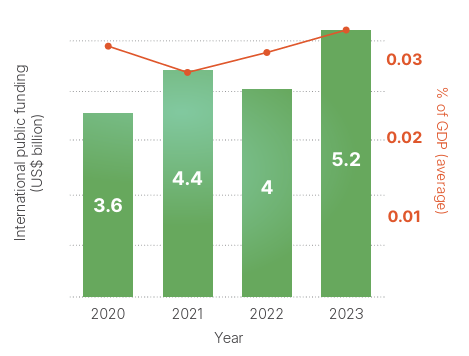
No meaningful progress was made in Yerevan to change this trajectory. Instead, significant effort went into widening the contributor base beyond developed countries to include emerging economies, such as China, India, Qatar and Saudi Arabia. But parties finally opted for a voluntary approach where the CBD Secretariat would invite additional parties to ‘assume the obligations’ of developed countries, yet without enlisting them directly. Otherwise, there were no upgrades or additions to existing funding arrangements.
Where negotiators were more engaged was Target 18 of the Kunming-Montreal Global Biodiversity Framework (KMGBF) to eliminate, phase out or reform incentives that harm nature. In its way, this fits better with the spirit of the times, because this involves taking money off the table, suspending some of the $7.3 trillion in government subsidies to industries that damage natural ecosystems. Even here, however, the outcome was contested, with the global review merely pledging to take this into account.
 Terna Gyuse
With regard to private finance, one of the most memorable achievements of COP16 was the Cali Fund, a multilateral fund to be capitalised by sectors like pharmaceuticals and agri-tech that profit from the digital sequencing information (DSI) of biological diversity. The idea is for companies to contribute 0.1% of revenue, or 1% of profits. By the beginning of COP17, however, the Cali Fund had received just $10,656 in commitments—with only $7,085 deposited—from three small private-sector companies. Big pharma and big ag is yet to make any contributions, instead spending the last two years quibbling over its mechanics and modalities. Further design decisions were made during COP17, but none signify the jump start that’s clearly needed.
Is the private sector picking up the slack in other ways? Undeniably, private sector rhetoric about putting ‘nature on the balance sheet’ has accelerated in recent years. This makes sense because company value chains are exposed to environmental disruption, so improved information and data-sharing should support firms to respond rationally to risks and opportunities. Hence the push by initiatives like the Taskforce for Nature-related Financial Disclosures (TNFD) to incorporate nature into corporate reporting and disclosures.
Among the nature finance community, however, there was a widespread disappointment with International Sustainability Standards Board (ISSB) for failing to entrench nature into its global standards framework. Instead of adopting the TNFD recommendations into its guidance, the ISSB released a Practice Statement, which incorporates the TNFD’s recommendations, but does not require companies to comply with the Practice Statement to state compliance with relevant standards, namely IFRS S1 and S2. ISSB acknowledged the demand from investors for information on nature, but elected to give markets more time to adopt its existing standards.
Not everyone is happy. In one of the only testy exchanges I saw at COP17, New Zealander Sue Lloyd, Vice-Chair of ISSB, was forced to defend its incrementalism from her interlocutor, Hirotaka Hideshima of Daiichi Life Group, who proposed ways to accelerate uptake and give the standards more teeth. Many attendees had a stake in this conversation, committed to transitioning business toward the global goal of Nature Positive, yet lacking clear signals to strategize and coordinate around. There are opportunities to innovate, to build new nature tech, to change institutional practices, to mobilize investment—but only if sufficient momentum is gained, only if the image of a shared future trajectory is sharp enough to cut through the corporate tendencies to free ride and privatize common value.
What is sorely lacking is the courageous decision: the decision that causes some inconvenience and upset, but creates the friction with which other initiatives can get going. I use ‘courageous’ here in the Platonic sense that it correctly judges what is worth fearing and what is worth fighting for. With regard to reversing biodiversity loss, a short-term blowback might be tolerable in pursuit of the greater good, which preserves and sustains the biophysical foundations for our societies and economies.
Of course, business leaders are capable of courageous decisions, but this occurs in a competitive context where survival is paramount. Going it alone can easily result in market disadvantage, which is why corporate sustainability so often shows up as coalitions and alliances. Typically, the responsibility falls to the state to take courageous decisions in pursuit of the common good. As a matter of historical reality, the formation of new markets is interspersed with decisions by governments to set the direction of travel on societal challenges, to build infrastructure ahead of demand, to support research and stimulate innovation, to set policy that defends and enhances public and private value. Alongside consumer demand, this creates the friction that firms can adapt to, driving them to improve over time. Without it, corporations are disposed to simply optimize for the status quo.
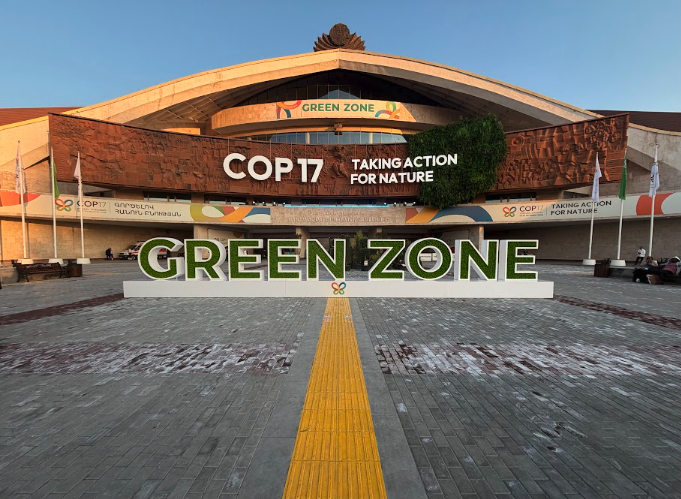
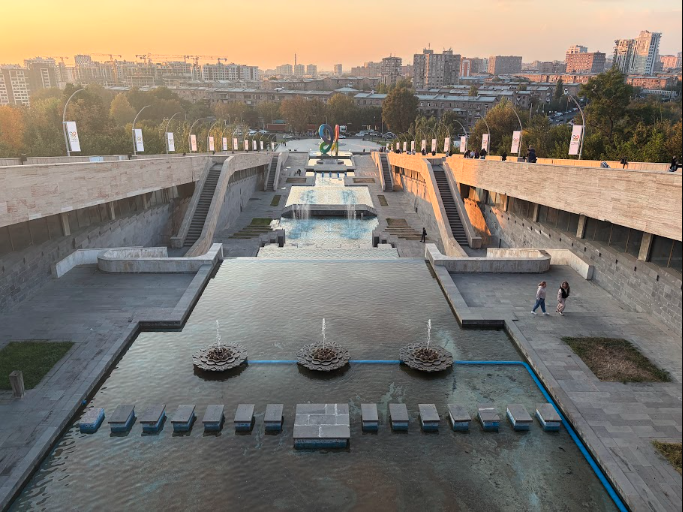
Views from the COP 17 Green Zone, which is open to the public. Author's photos.
We will know we are getting somewhere on nature finance and nature markets when governments recover their capacity for courageous decisions. This need not only show up as international transfers, which I daresay will always be challenging. It could show up in many other ways: Integrating nature into mandatory requirements for financial disclosures. Requiring companies to commit to multilateral instruments like the Cali Fund. Stimulating and compelling market demand for contributions to the KMGBF targets. Targeted funding for market-making research on biodiversity protection. Knowledge and technology transfer to countries that need solutions. Direct support for nature-based jobs.
With the tide turning on reactionary politics in many countries, perhaps the space for political courage on nature will broaden once again.
Finally, by way of epilogue, what took me to COP17?
In addition to representing Toha Network in a couple of events about the East Coast Exchange (ECX) in Tairāwhiti, I travelled to Yerevan to support the International Environmental Guardianship (IEG), a new member-based organization of Indigenous Peoples, Local Communities and Afro-Descendants across the world’s seven socio-cultural regions. The IEG is unique as a collectively governed, Indigenous-led organization that is constituted to promote ethical, equitable and sustainable stewardship and leadership for nature.
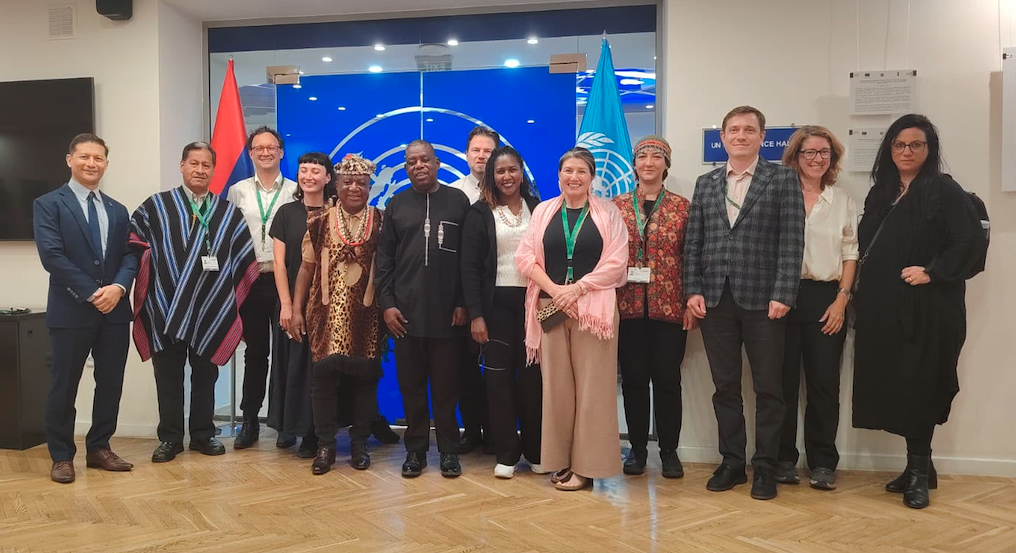
In Yerevan, the IEG seeded a new campaign, the 8 Billion Hour Pledge: a global commitment to register and verify 8 billion hours of work in service to nature. The design of the pledge is sensitive to issues that frontline communities have raised for years, such as excessive intermediation of funding flows, and the need for direct access and direct authority over funding. Under the 8BH Pledge, funders are invited to reserve hours of work upfront, which unlocks rights to access data and claim nature-positive impacts. The aim is to create a trusted inroad into high-integrity projects that enjoy community consent.
Reach out at david.hall (at) toha.nz if you’d like to learn more, or register your interest at the link below.


The author’s IEG-related travel to COP17 was facilitated by UNDP, with funding from the European Commission and Deutsche Gesellschaft für Internationale Zusammenarbeit (GIZ).