In this week's edition of The Pointillist, a collection of newly published reports and frameworks that coincided with the UN Biodiversity Conference COP 17. This expands upon last week's newsletter (see The Shift #4) which captured my personal reflections of being in Yerevan. Read on for more technical insights into nature finance, nature markets, nature bonds, integrity standards, and more.
For a comprehensive review of the final outcomes of COP 17 in Yerevan, see this excellent analysis by Carbon Brief:
 Carbon Brief Staff

With regard to international progress on biodiversity goals and targets, the global stocktake report by the Convention on Biological Diversity (CBD) is chastening. Its main takeaway is this:
The Kunming-Montreal Global Biodiversity Framework [KMGBF] has generated unprecedented global engagement and driven action, innovation, collaboration and learning experiences across all 23 of its targets. However, unless collective implementation accelerates rapidly, the 2030 targets and mission will not be achieved. While it is too early to detect change in biodiversity outcomes, the slow rate of current progress represents a long-term risk, as achieving the 2030 targets and mission are the foundation for putting the world on a pathway towards the 2050 goals and vision.
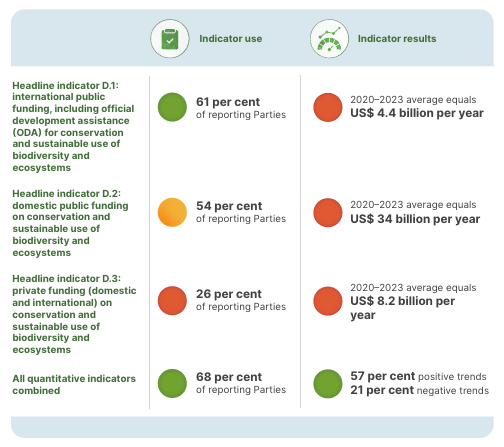
Readers of The Pointillist will be especially interested in KMGBF Target 19 on nature finance, which aims to increase the level of financial resources from all sources to at least $200 billion per year by 2030. This includes a specific commitment for developed countries to increase international financing to developing countries to at least US$20 billion per year by 2025, rising to US$30 billion per year by 2030.
The CBD's scorecard is fairly dismal (see below). Combined sources are less than US$50 billion annually, well short of the 2030 target of US$200 billion annually.
For more detail on the state of nature finance ecosystem, the UN Environment Programme Finance Initiative (UNEP FI) update report is a good place to start. It also quantifies the nature finance gap, as well as the advances elsewhere in financial reporting and sustainable finance taxonomies.

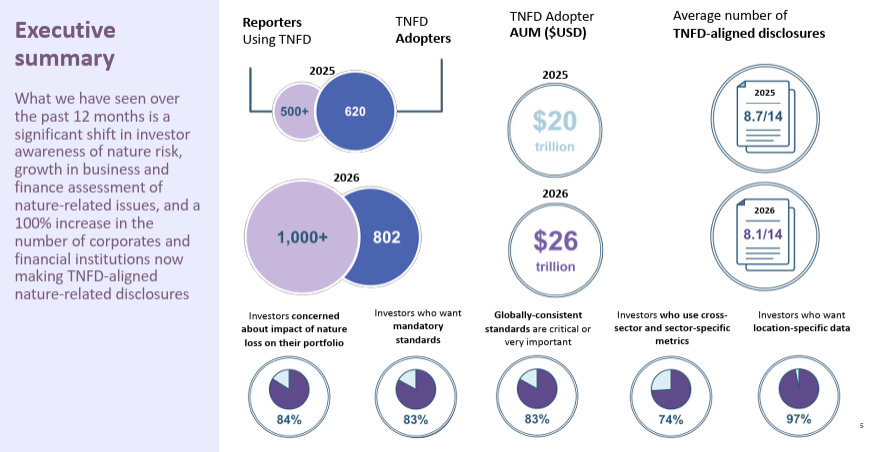
With regard to financial reporting, the 2026 status report for the Taskforce for Nature-related Financial Disclosures (TNFD) shows that the integration of nature into corporate disclosures is continuing to gather pace, despite the reactionary headwinds in many parts of the world.
Nature Positive Initiative (NPI) published the State of Nature (SoN) indicators and metrics. These are intended to be the nature-related equivalent of the GHG Protocol, a common reporting standard for businesses and other organizations to declare their impact. TNFD is committed to incorporating these as core metrics in its own reporting framework.
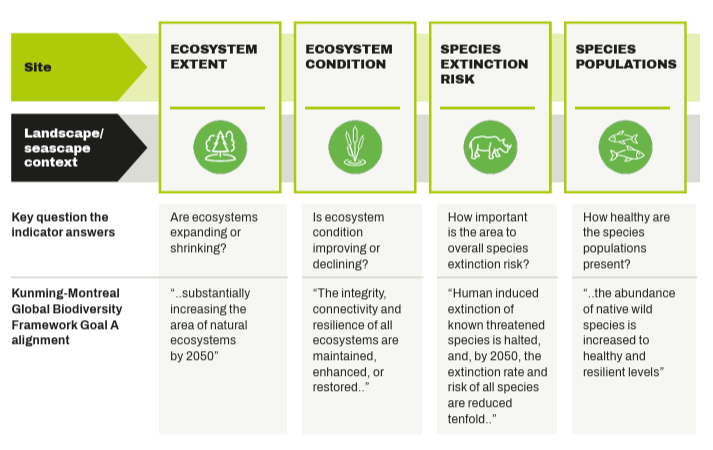
Relatedly, the Science Based Targets Network (SBTN) also released its Science-Based Targets for Nature 2.0. Targets sit at the practical end of the corporate reporting and disclosure process, when companies actually make commitments to mitigate the risks they identify, or to maximize nature-positive opportunities.
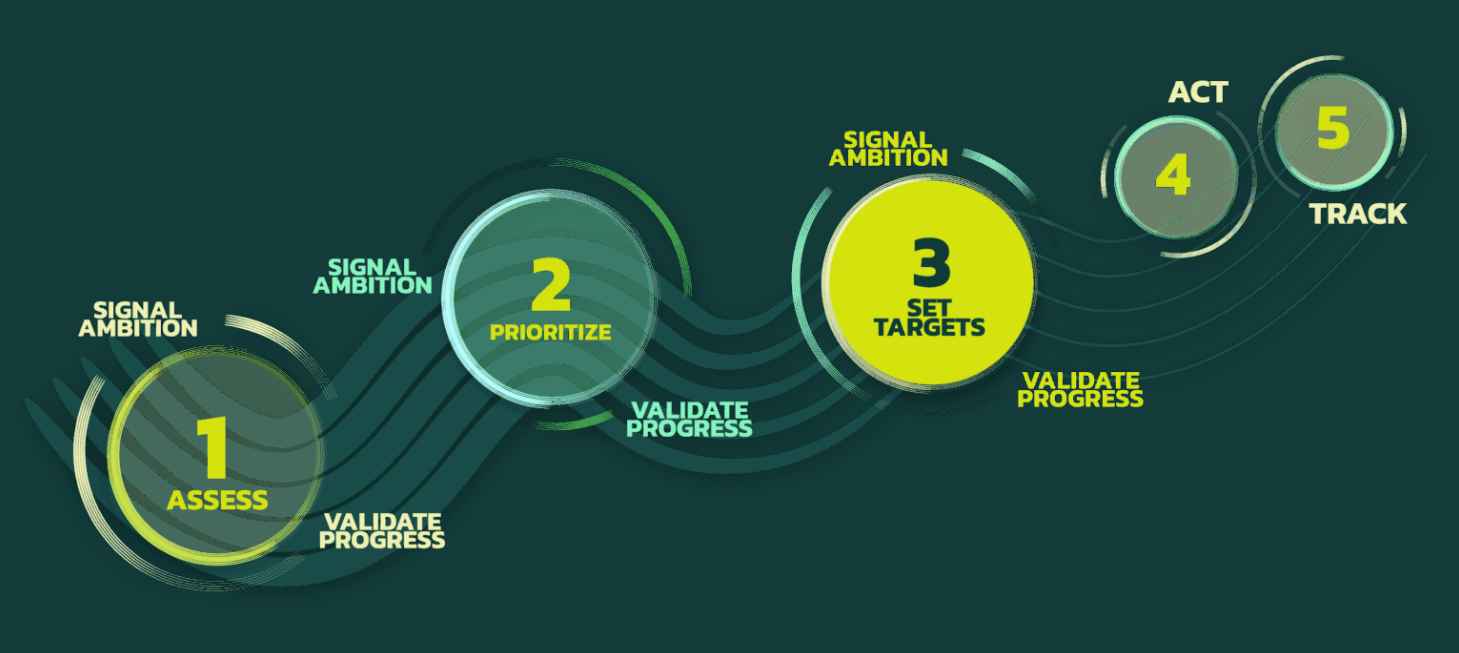
SBTN also published a database of companies setting science-based targets, and a report, Step Up for Nature, which showcases those companies' efforts.
Through these coordinated releases, TNFD, NPI and SBTN are working together to co-develop a voluntary regime for nature-positive action, which encourages companies to move from measurement to reporting to taking action. These are promising developments, but, as I described in my last post (The Shift #4), what's lacking globally is the courage or compulsion to get nature action moving.
One of the challenges of mobilizing private finance for nature is the elusiveness of financial returns. This makes it hard to engage debt and capital markets, because these require a return on investment, typically at market rates.
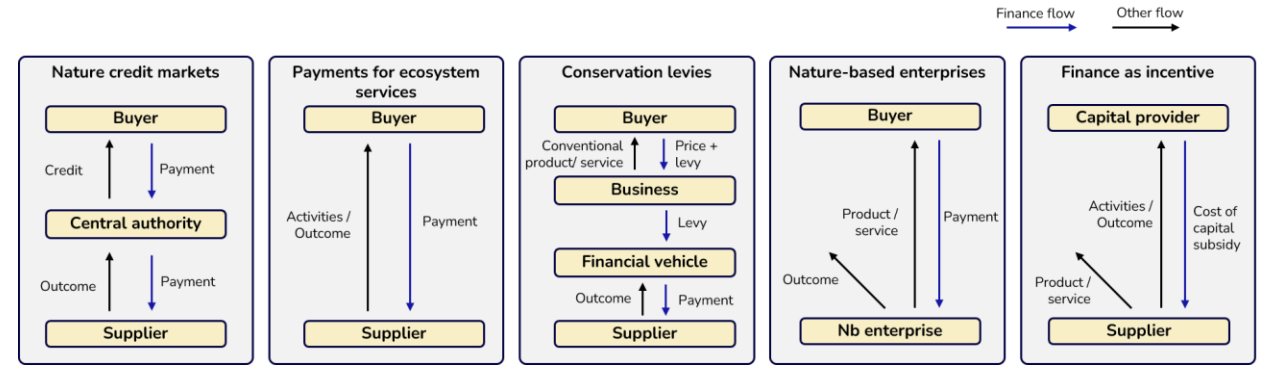
The Revenues for Nature (R4N) initiative, led by the Green Finance Institute (GFI) along with UNEP FI and UNDP BIOFIN, published a very succinct typology on revenue and capital flows. Drawing on existing business, R4N boiled down nature finance to five revenue models: (i) nature credit markets, (ii) payments for ecosystem services, (iii) conservation levies, (iv) nature-based enterprises and (v) financial incentives through concessionary terms and reduced cost of capital (see the figure below):
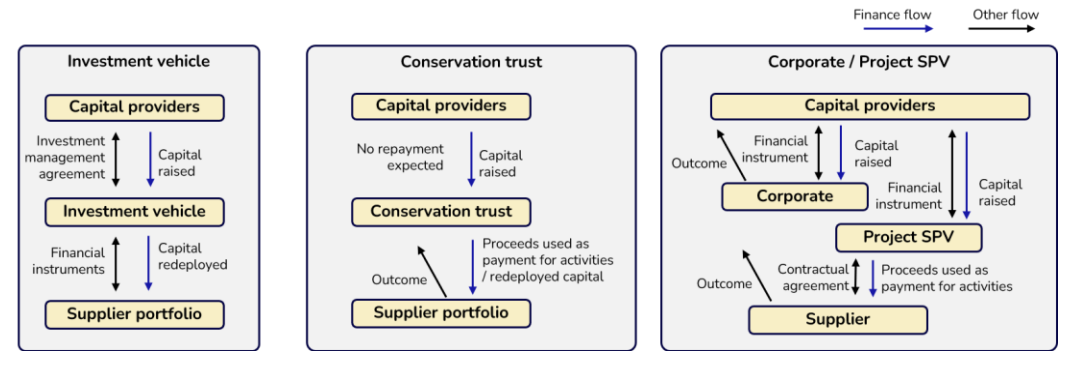
The typology also goes beyond revenue flows—that is, payments to businesses that generate nature-positive outcomes—to examine capital flows—that is, the provision of debt or equity to nature-positive businesses, either directly or via intermediaries (see the figure below):
The R4N Initiative also published a report on 'nature bonds'—that is, labelled debt instruments where the use-of-proceeds is mandated for nature-positive outcomes.
The report's title is Nature Bonds: Scaling Resilient Supply Chain Models through Sovereign and Corporate Debt—and its explanation of this title is illuminating.
A resilient supply chain model, in the R4N framework, is a production system in which conservation of the surrounding ecosystem is structurally integrated into commercial operations, not as a cost mitigation measure, but as the source of productive value itself. Sustainable fisheries that depend on healthy marine ecosystems; certified forestry that requires intact watershed function; regenerative agriculture that draws on functioning pollinator networks and soil biodiversity; watershed services that protect downstream processing infrastructure, these are all productive landscape and seascape models. What distinguishes them from conventional supply chains is that the ecological integrity of the landscape is the asset: it conditions yields, reduces volatility, maintains certification eligibility, and sustains buyer contracts over the 10–30-year horizon that a nature bond requires. Investment in the landscape is therefore not a subsidy to conservation: it is capital expenditure on the productive asset base.
This is what makes green bonds enticing as an instrument: their scale enables them to capture whole supply chains or landscapes, and therefore to capture more holistically the value of integrated ecological systems.
But nature bonds are not going to fall in anyone's lap. Someone, somewhere, needs to take decisions to attract that capital, particularly by addressing the supply-side gaps that deter investment today. The report's gap assessment follows:
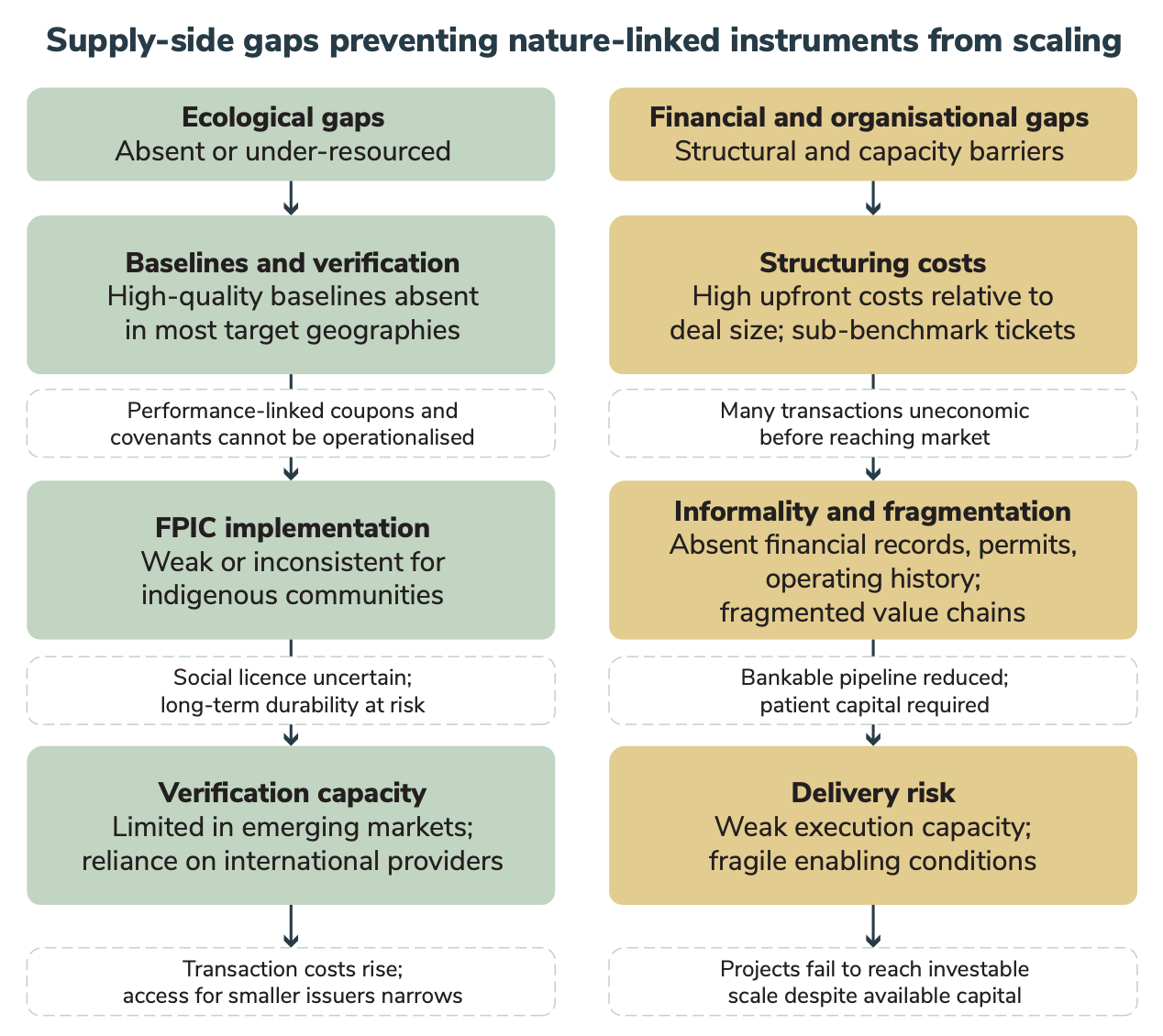
In the language of conventional economists, these are 'market failures' that must be proactively addressed to increase the likelihood of bond issuance. The R4N report recommends the following interventions:
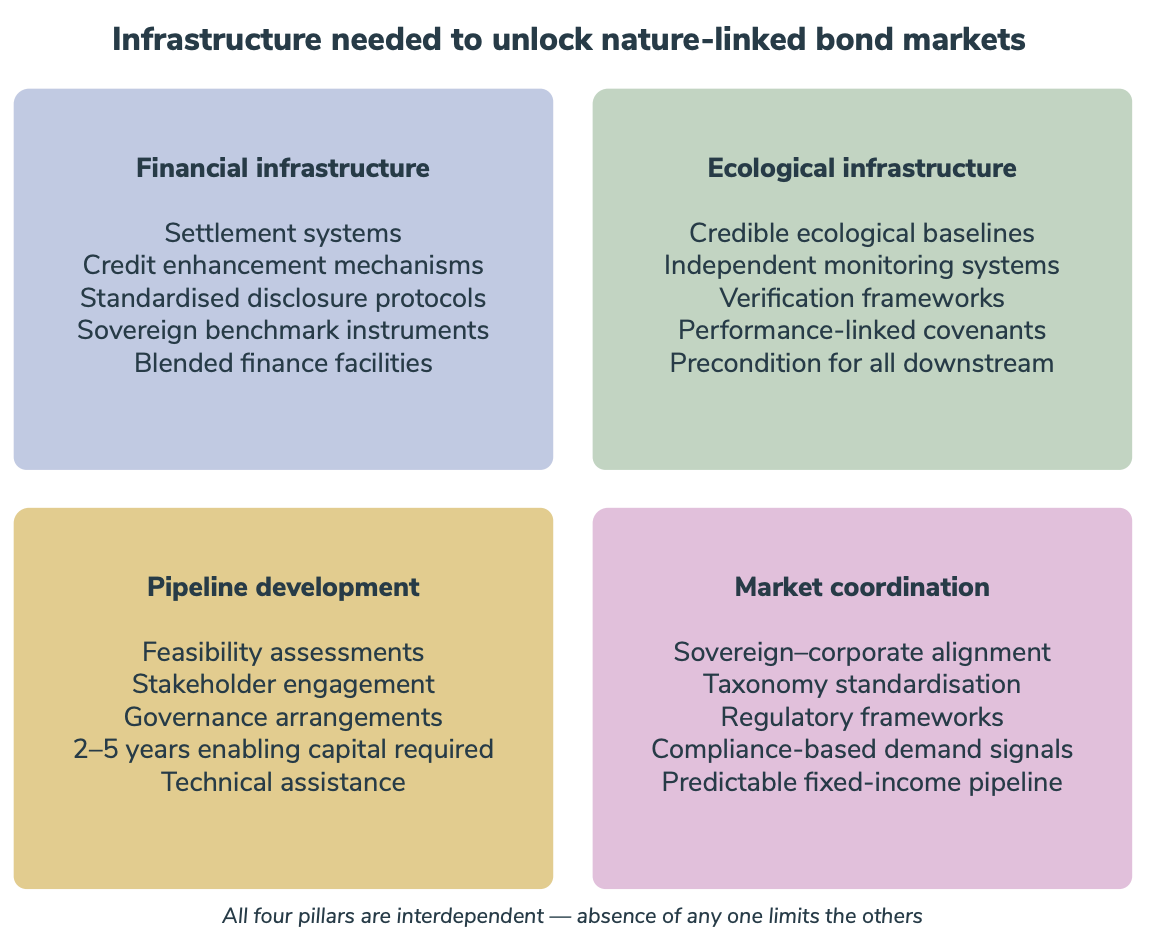
Consider regions like Te Tai Rāwhiti and Te Tai Tokerau, which would benefit most from improved access to capital for mitigating nature-related hazards like flooding and erosion. The above is a loose list of what needs to be established to attract impact-oriented capital—with robust baselining being identified as the most important of all:
...without credible baselines, monitoring, verification, financial structuring, pipeline development, and market coordination have nothing reliable to price or contract against, so it must be established first rather than in parallel.
The R4N report argues further that the responsibility to address these gaps falls on multiple parties, including the public sector. This isn't only because governments can be called upon to 'do the right thing', but also because governments are seriously exposed to the risks of a nature-negative economy:
The sovereign dimension of nature finance is not peripheral to this central argument [that nature is a productive asset base]: it is foundational to it. The most compelling reason to shift corporate investment in landscapes and seascapes from a cost line to a balance sheet asset is precisely that nature degradation now demonstrably raises the cost of sovereign borrowing, and therefore the cost-of-capital environment in which all corporate and project finance operates.


This argument about sovereign risk comes from a working paper by LSE researchers from earlier in the year. The paper provides:
the first empirical analysis of the financial effects of nature degradation on sovereign bonds: a critical asset class, which determines the costs of sovereign government borrowing, fiscal policy space, and which indirectly affects the cost of capital in the private sector.
The paper found that countries with higher levels of biodiversity degradation pay a sovereign borrowing cost penalty: on average, around 40–75 basis points (bps) for 5- and 2-year maturities, respectively, and across three proxies for nature-related financial vulnerability.
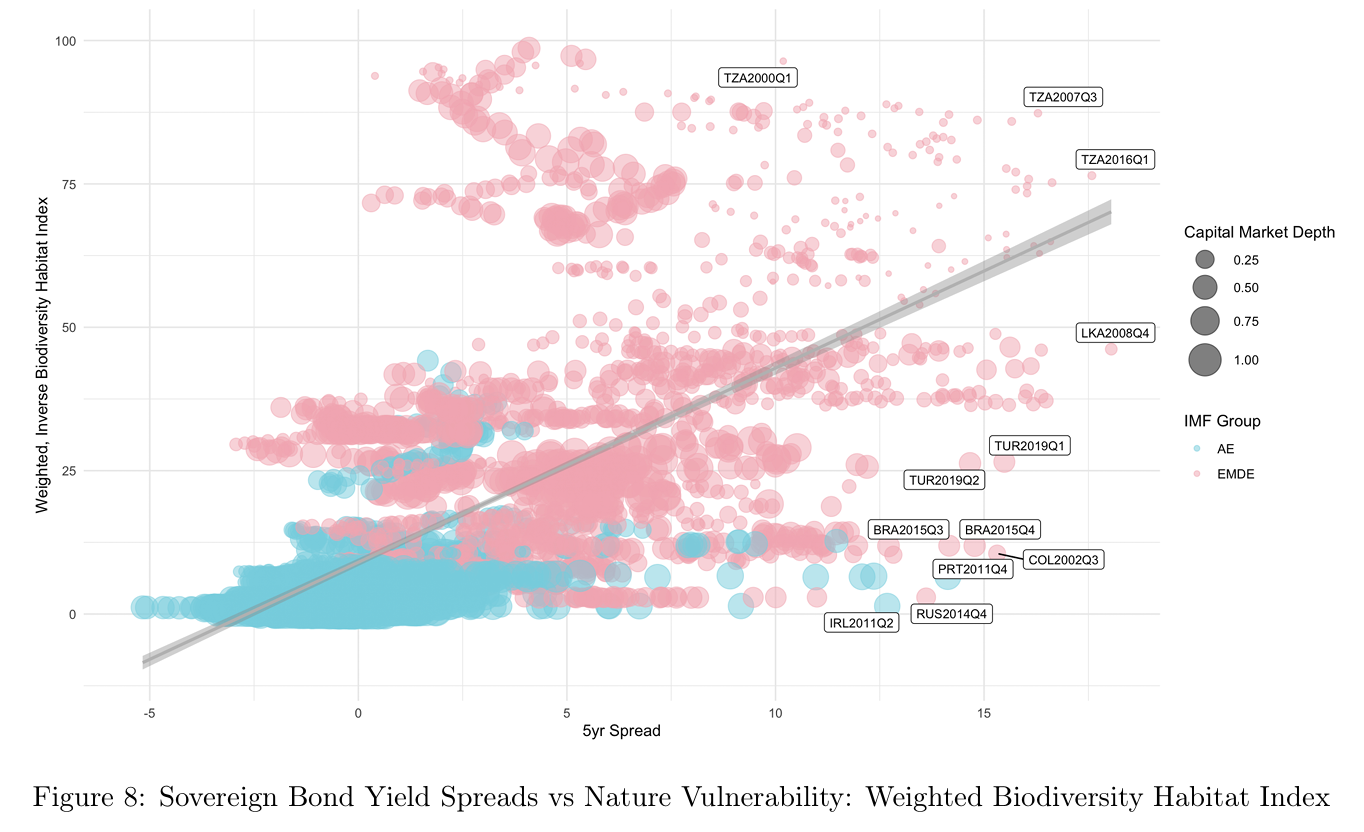
What the chart above shows is that countries with higher nature-related financial vulnerability tend to exhibit higher borrowing costs (which is the bond yield spreads on the x-axis), and also lower capital market depth (which is represented by the size of the dot). The chart also shows that EMDEs, or emerging market and developing economies, are more exposed to sovereign risk than AEs, or advanced economies (represented by the pink and blue dots respectively).

With regard to another revenue model—nature credit markets—the UK-France-backed International Advisory Panel on Biodiversity Credits (IAPB) used COP 17 to release new material in support of high-integrity nature credits markets.
Most notable is IAPB's draft nature market standards, which are open for consultation until 8 January 2027. The standards are Inclusion & Equity, Additionality and Credit Lifecycle.


Additionally, IAPB released a report (co-developed with Landbanking Group) that articulates returns from nature credits. The report proposes 'an open-source Return on Investment (ROI) methodology, through which a company can estimate the value that an improvement in the state of nature creates for its own operations and supply chains.'
Among other things, the report also makes a subtle but important point that credit-based markets make most economic sense when delivery of nature-positive impact is risky. If transaction costs are uncertain and potentially high, then funders are better to transfer that risk onto the developers of credit-based projects. However, if the funder has existing channels and delivery mechanisms, then direct investment into supply chains is likely to be more efficient (this is visualized in the chart below).
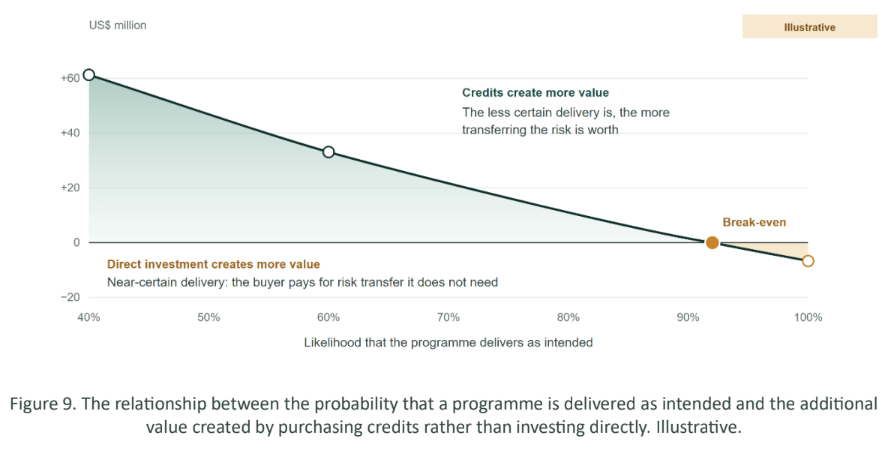
While we wait for nature credit markets to scale, it makes me wonder whether growth in supply chain investment will occur first as a credible sign that companies are actually taking seriously their nature-related risks.
Both Biodiversity Credit Alliance (BCA) and IAPB also published reports on insurance, respectively The Role of Insurance in the Biodiversity Credit Market and Insurance and Nature Markets: De-risking for Scale.
The BCA briefing explains the role of insurance in reducing risks in biodiversity credit markets by providing coverage to projects. This makes transactions more financeable, while also delivering risk mitigation through improved ecosystem resilience.
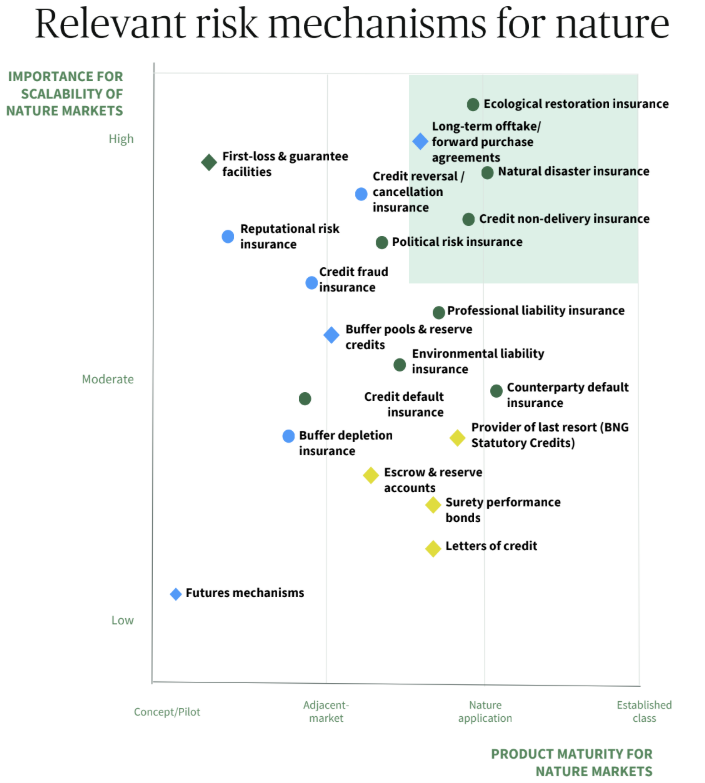
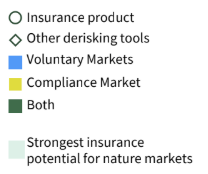
The IAPB also frames insurance as an important component of market architecture, identifying a wide range of risk transfer mechanisms that might support the upscaling of nature markets (see the chart below).
The emergence of nature markets, or at least the speculation that they will emerge and scale, has attracted criticism too. There is a very real danger—and I say this as someone who has published reports on financial innovation in forestry, biodiversity and adaptation—that the conversation over market mechanisms that could exist becomes an excuse to do nothing now, because it creates false hope for future financing flows that may not ever materialize.
Green Finance Observatory and Centre for Socio-Ecological Economics are among the more critical voices in this space. Their directors, Frédéric Hache and Clive Spash respectively, co-wrote a critique of the IAPB, BCA and WEF (the High Integrity Coalition) which is worth reading as a countervailing perspective.
'An implicit reformist agenda is being disguised as transformative sustainability' — Frédéric Hache and Clive Spash
Hache and Spash worry that nature markets are on track to reproduce the integrity issues that bedevilled voluntary carbon markets and ultimately repelled market demand. Further, they worry that the hype around biodiversity credits has crowded out much-needed conversations about the role of public policy:
Why are biodiversity credit markets deemed to be the most preferable policy when alternative policy tools exist, such as tighter environmental regulations curbing destruction at source, and shifting existing harmful subsidies? The Framework recognises that biodiversity credits are not a silver bullet or substitute for more consistent public policies which, besides changing price incentives and subsidies, include ecosystem protection and sanctions against harmful behaviour and pollution. However, the High Integrity Coalition fail to conduct comparative analysis of these alternatives. There is then no explanation as to how public regulation and market-based mechanisms are meant to operate together. The argument is put forward that “all possible tools need to be utilized” due to the scale and urgency of the combined climate change and biodiversity crises (WEF 2025: 3). This ignores the documented conflicts between different mechanisms that produce counter productive results (Ling, et al. 2024). More specifically no account is taken of how economic incentives crowd-out moral behaviour and can be self-defeating as a result (Frey and Oberholzer Gee 1997).
 Skip to content
I do worry that Aotearoa New Zealand is characteristic of these critical concerns, where the spruiking of nature markets is obscuring the responsibilities of public policy.
Earth Sciences New Zealand recently published a policy brief on nature-based solutions which argues sensibly for improved support for decision-making, and regulatory alignment. Yet as the report notes, recent reforms in resource management have tilted the decks against nature-based solutions:
While the new system seeks to align better environmental protection, economic growth and infrastructure needs, it does not explicitly require decision-makers to consider or prioritise nature-based solutions. As a result, uptake will depend on regional plans and local implementation. In addition, the precautionary principles (clause 166, Natural Environment Act) has been deleted. Its removal may make it harder to justify preventative measures, including nature-based solutions, where benefits are uncertain, long-term or difficult to quantify, such as in flood mitigation.
Provisions relating to compensation for 'regulatory relief' (Planning Act), may also limit the implementation of nature-based solutions. These provisions create a mechanism for landowners to seek compensation where planning rules significantly restrict the use of their land for certain protected values, and councils may face financial and legal challenges to implementing nature-based solutions adjacent to or on private land.
Ideally, we would see markets and policy pulling in the same direction, but instead these policy shifts are inhibiting the likelihood that funding or financing will flow toward nature-based solutions.
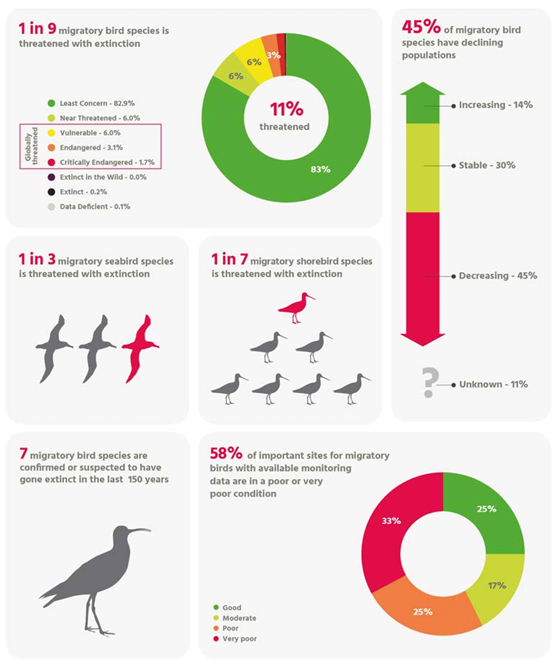
Finally, to scoop up a couple more COP 17-related releases, Birdlife International published its State of the World’s Birds 2026 report, this year with a focus on migratory birds.


And another landmark report is this 850-page global assessment of the world's soil stocks by the UN Food and Agricultural Organization (FAO).
Soil erosion is identified as the most severe and interconnected threat to global soil health. Across the seven regions assessed, 65% of assessments report a deteriorating trend since 2015, and 81% of assessments judge erosion management to be poor or very poor.
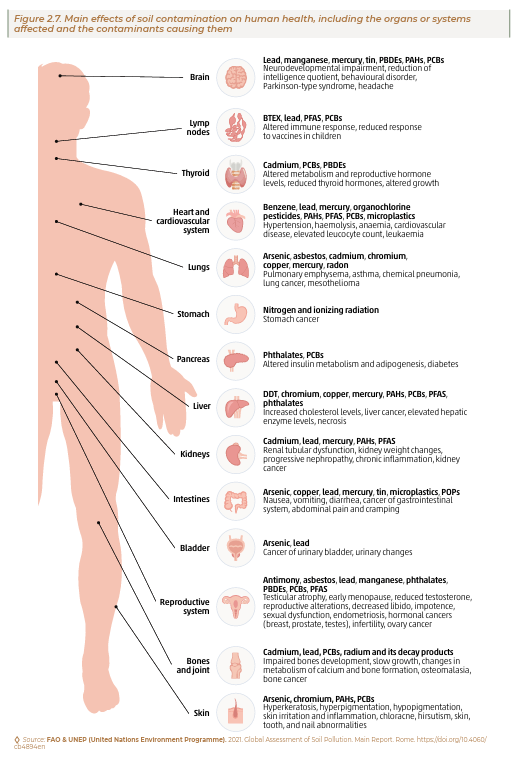
Another risk is soil contamination, visualized in the chart below, which seems designed to appeal directly to the constituencies aligned with MAHA, or Make America Healthy Again, who have seized upon soil health as a pro-environmental concern within the Trump administration.