This is an essay I had planned to start the year with: a few words of encouragement for anyone feeling demoralized by the backlash against climate action. However, climate action got in the way of climate writing, so I only returned to this after an RNZ interview with Kathryn Ryan — to promote the new book Kiwis in Climate — which left me wanting to express more clearly what I blundered through on air. So, here it is, an essay on why the possibilities for climate action are not hopelessly foreclosed — even on the brink of a global commodities crisis — and how strategy can turn our fortunes around.


Join me with esteemed Indian writer Amitav Ghosh (Nutmeg's Curse, Great Derangement) and novelist Charlotte McConaghy at the Auckland Writers Festival on 17 May 2026.
Climate action is a tidal phenomenon. It peaks and then — events! events! — the moment slips away. The ebb, the retreat from ambition and seriousness on climate change, is what many people have experienced over the last few years. It has injected a mood of defeat into the climate movement, even resentment toward the other issues arresting the public’s attention.
For months it’s been obvious that this year’s general election in Aotearoa New Zealand will be all about the economy — with fiscal rectitude on one side, and affordability on the other. The repercussions of the Israel-US attack on Iran will only intensify this economic fixation.
Some in the climate movement treat this fact — that climate change is not the overriding electoral issue — as a terrible setback. As if every election that isn’t a ‘climate election’ is a defeat.
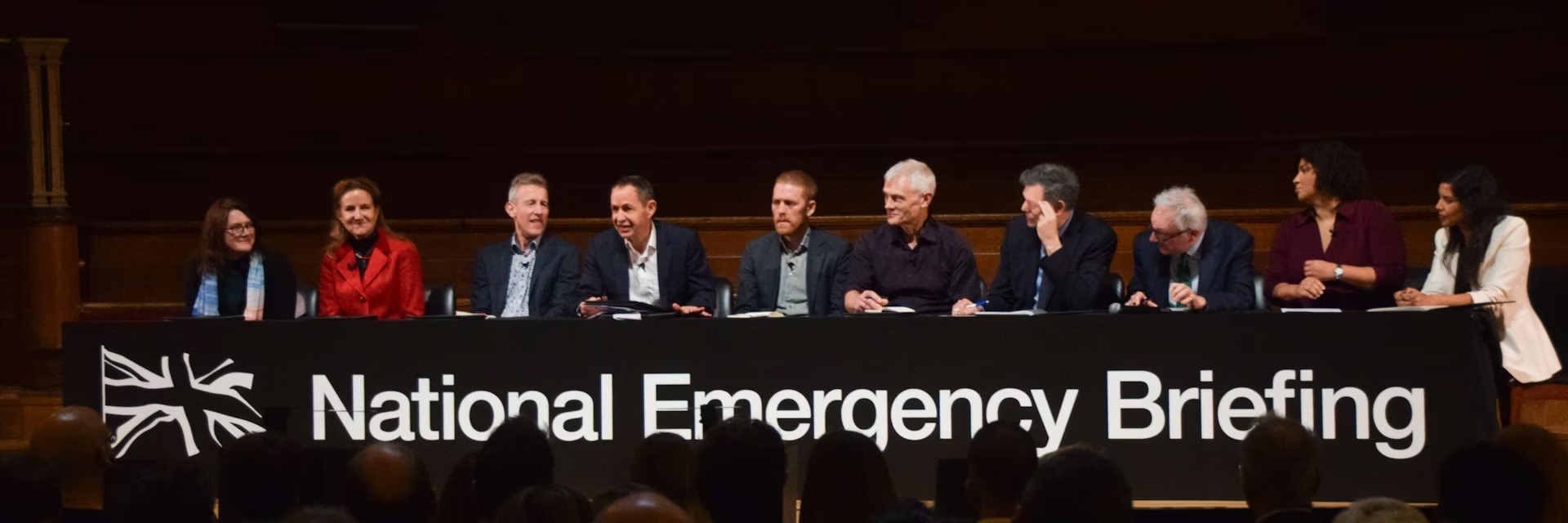
From this perspective, the challenge of climate action is principally one of public salience. It follows that the solution is to make climate change the highest concern for most, if not all, New Zealanders. It presumes that consensus is a necessary, possibly even a sufficient, condition for meaningful progress. An idea floating around in recent months is a local version of the UK’s National Emergency Briefing, where earnest experts hold forth at lecterns with perilous charts to scare their audiences into action.
This is a losing strategy.
The social science on climate communications warns against this approach, or at least an overreliance on it. At its crudest, it incorrectly presumes that the majority of the public is held back by a ‘knowledge deficit’ that can only be overcome by a barrage of hard facts. It also treats fear as the most effective motivator when, actually, fear is a fickle emotion, useful for getting people’s attention, but liable to trigger fight, flight or freeze responses. Instead of climate action, the public might descend into unconstructive bickering, avoidance or repression of climate change because of psychological distress, or a paralysing sense of dread.
Beyond communications, this approach also downplays the possibilities for making progress on the back foot, even when climate change is not high on the political agenda.
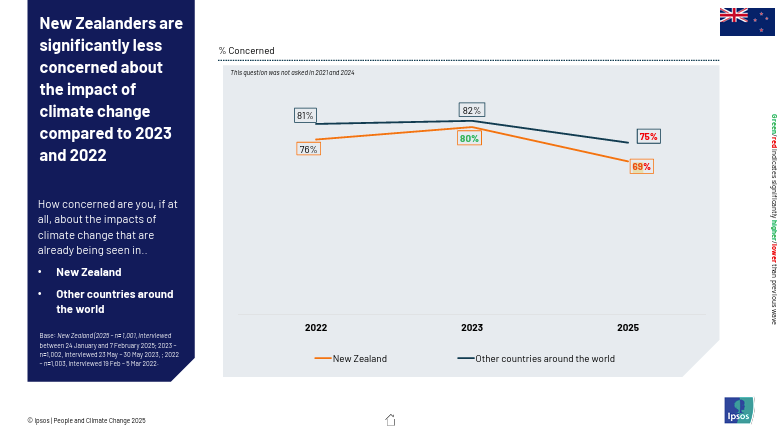
First of all, to be clear, most New Zealanders do care about climate change. IPSOS’s 2025 polling finds that 69% of New Zealanders are concerned about the impacts of climate change that are already being seen in this country (see chart below). To be sure, levels of concern declined recently, but that’s coming off an all-time high of 80% in 2023 when a series of severe weather events, notably Cyclone Gabrielle and the Auckland Anniversary floods, gave many New Zealanders a taste of future dangers and present-day vulnerabilities. Today's levels of climate concern are similar to 2019 which was the pre-Covid high-water mark for the climate movement, when School Strike 4 Climate and Extinction Rebellion were at peak influence. While the spirit of ‘climate emergency’ predictably lost its force, it did help to embed the public’s concern. Society's acknowledgement of climate change might be repressed, but not easily reversed.
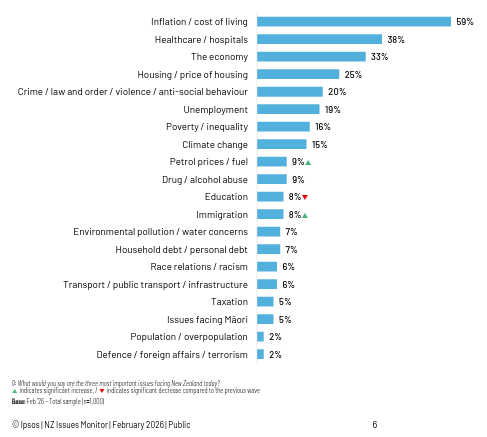
The challenge for climate action is rather one of prioritization. More recent polling by IPSOS finds only 15% of New Zealanders identify climate change as one of the top three issues of concern (see chart below). Cost-of-living and inflation is the most pressing issue for New Zealanders (59%), with the economy coming third (33%) and housing affordability fourth (25%).
So, New Zealanders care about climate change, but they appear to care more about other issues. This reinforces the conviction — held most passionately by politicians and others with responsibilities to lead — that climate change is off the political agenda, or on its margins at best.
But I disagree with this interpretation of public opinion. It treats public issues as discrete and mutually competitive, as a set of trade-offs in the attention economy. Basically, it conceives of citizens like cash-strapped consumers who are choosing one product over another, leaving some public problems on the shelf by putting others in their basket.
It also borrows more than a little from rational choice theory, an academic construct that treats individuals as bundles of stable, persistent and ordinally ranked preferences. But this is an abstraction, a set of parameters for mathematical modelling, not an accurate or comprehensive explanation of human psychology and sociology. Reductivist assumptions can undoubtedly be useful for the former purpose, but this does not mean they can be wholly relied upon for the latter.
As an understanding of public opinion, this approach has two critical flaws. Firstly, it downplays the extent to which public problems are interconnected and mutually determined. For complex policy problems — like climate change, energy scarcity and global inflation, which overlap and intersect with one another — it is often the case that addressing one problem has implications for the others. From that perspective, we might see the public’s prioritization of cost-of-living as an invitation to ask how climate action might reduce the costs of living, or reduce exposure to future costs. As the rest of the essay shows, the opportunities to make these connections are numerous and accumulating.
Secondly, and relatedly, this approach diminishes what the American novelist F. Scott Fitzgerald famously described as ‘the test of a first-rate intelligence… the ability to hold two opposed ideas in the mind at the same time, and still retain the ability to function.’ Human beings are not merely meat-strapped algorithms whose actions are governed by a limited and coherent choice set. We are complex creatures that act within a flux of beliefs, yearnings, feelings, emotions, intentions, reflections, intuitions, memories, imaginings and ideologies. These can be contradictory and incoherent on the face of it, yet we create meaningful lives by sailing through this unruly inner world, reconciling the apparently irreconcilable. We can care about climate change, deeply and authentically, while also giving priority to other goals, such as pursuing a career and feeding one’s family. This need not be a failure of integrity — and overzealous activists do themselves no favours by browbeating other people for allowing non-climate issues to ‘cloud their vision’. Instead, as many climate activists do very well, we can support our fellow citizens to navigate the modern world in less harmful ways, and reveal how climate action is intertwined with their own vision of a flourishing life.
In short, the way that public opinion is commonly understood can dampen our imagination for action. Moving beyond this is a matter of strategy, of bringing future possibilities into existence by creating connections and coherence in the present. So let us thread together these challenges: the cost of living and the climate crisis.
Here is an alternative way to interpret this moment: most New Zealanders are turning toward a materialist politics, oriented toward the material foundations of well-being. We talk about ‘cost of living’, but this is really a cluster of concrete concerns with the price of food, electricity, transport and other daily necessities. And these issues are not unrelated to climate change. On the contrary, by being material in nature, they are bound up in our interactions with the physical world, including what we give and take from the carbon cycle.
On the cost of food, the increased frequency and intensity of climate-related weather events, especially heat, drought and heavy rain, is already impacting food prices (see the chart below). This affects the price of food we import. To use olive oil as an example, unprecedented droughts in Southern Europe across 2022/23 impacted yields in Italy and Spain, the latter producing over 40% of global olive oil. Consequently, in New Zealand between 2022 and 2025, retail prices for olive oil rose from about $11 per litre to nearly $23, more than a 100% increase.
Climate change also affects the price of food we produce ourselves: firstly, because our farms are no less exposed to climate-induced shocks; and secondly, because food prices in New Zealand are influenced by global commodity trends. For a trading nation like ours, global scarcity can increase the price of foods which are domestically abundant, because New Zealand consumers are competing with offshore consumers to fill their grocery bags.
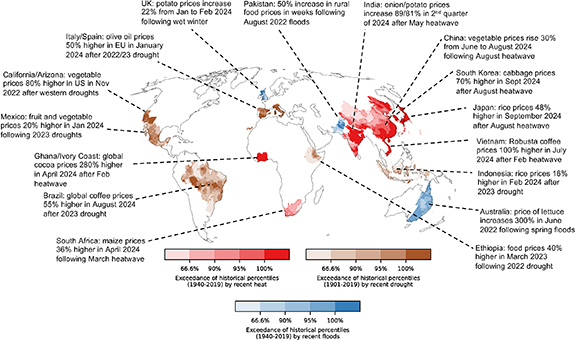
This is one way that climate change is already contributing to global inflation. A recent modelling exercise, which extended these observable impacts into the future, estimates that current global warming trajectory could increase annual food and headline inflation by 0.92–3.23% and 0.32–1.18% respectively, as a global average. The usual macroeconomic response — increasing interest rates — might dampen these effects temporarily, but it cannot address the drivers of inflation at source. Climate resilient farming might help, but adaptation to climate change has its limits, especially in the worst case scenarios. Ultimately, there is no avoiding the need to rapidly reduce emissions; otherwise, the climate-related disruptions that increase the cost of food will keep getting worse.
Two other drivers of looming inflation are the cost of electricity and transport, both of which are underpinned by the cost of energy. Currently, about 80% of the final energy the world consumes comes from fossil fuels. Materially, that amounts to more than 4.5 billion tonnes of oil, 9.2 billion tonnes of coal, and 4.1 trillion cubic metres of fossil gas each year. Any elevation in its price has a major impact on global inflation, both directly through the costs of electricity and heating and higher prices ‘at the pump’, and indirectly as higher input costs increase the price of other goods and services – from fertilizers to freight, from plastics to manufacturing.
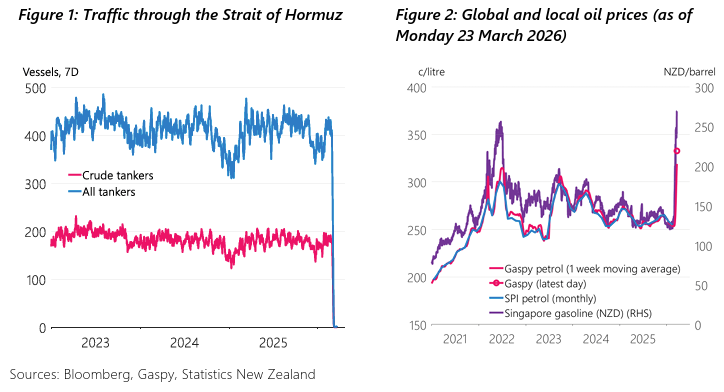
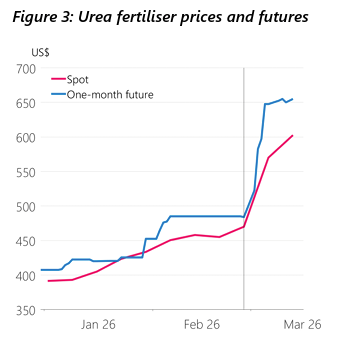
At the time of writing, we are careening toward an extraordinary inflationary event for energy, triggered by the Israel-US attack on Iran. The Strait of Hormuz is mostly closed to maritime traffic, sending the price of oil to well over $100 per barrel. In a ruinous game of tit-for-tat, the world’s largest LNG terminal in Qatar was disabled by Iranian drones, knocking out 3.5% of global LNG supply for the next 3–5 years. (This will affect the price of food as well as energy, not only because the global food system relies on fossil energy for production, processing and transport; but also because fossil gas is used for urea production in the Middle East as a major fertilizer supplier.) How this all plays out, no one can know, but because of the logistical complexity of global supply chains, we should expect things to get much worse.
One fifth, one third, one third, two fifth, nearly one half – these are the respective shares of global exports of liquefied natural gas, crude oil, fertilisers, helium and sulphur normally passing through the Strait of Hormuz. – Isabella Weber and Gregor Semieniuk
 Isabella Weber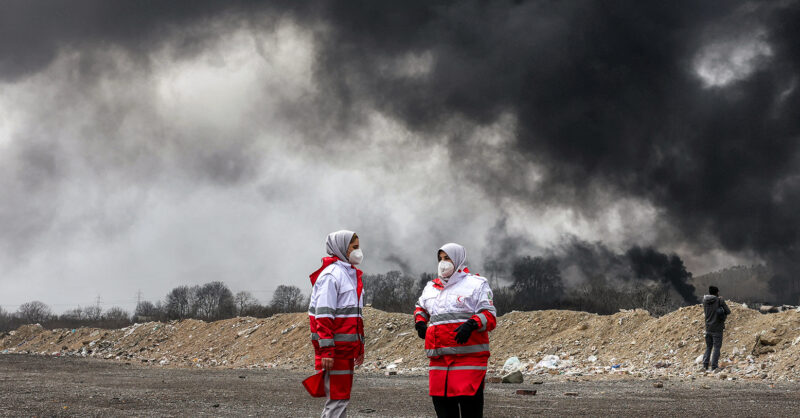
New Zealand is significantly exposed to the price impacts of this global commodities crisis. Of the final energy we consume, 70% comes from fossil fuels. Last year we imported 1.3 million tonnes of coal and 7.3 million tonnes of refined oil, mostly petrol, diesel and aviation fuels. These inflows of carbonaceous material keep us intimately bound to the convulsions and extortions of the global fossil economy. Imported energy is matched by outbound payments that benefit someone else’s economy, rather than our own. Rewiring Aoteaora estimated that, in 2023, we spent NZD$7.7 billion for petrol, NZD$7.8 billion for diesel and about NZD$1.5 billion for aviation fuels. In 2026, whatever liquid fuels we can secure will cost a whole lot more.
It is also true that New Zealand would be worse off still if not for our relatively high share of renewable energy (~85%) in electricity generation. East Asia and the EU are far more exposed, in that regard, because of their high dependencies on liquefied fossil gas for electricity and heating. But New Zealand has its own domestic challenge with dwindling gas reserves, which are increasing the cost of thermal generation to bridge the gaps in our electricity supply. Moreover, the New Zealand Government has recently been looking to increase New Zealand’s dependency on global gas markets by installing an import LNG terminal, and imposing a levy on all electricity users to subsidize it. Well-informed people, such as the Parliamentary Commissioner for the Environment, have asked whether the LNG terminal might actually increase electricity prices and hence the cost of living. Our dependency on fossil fuels leaves us exposed to the inflationary tsunami that is racing up our shores.
This is not the only way.
What makes recent oil crises unique is that there are market-ready alternatives to most of what we use fossil fuels for. Of course, past energy shocks have prompted diversification: for instance, much of New Zealand’s hydropower capacity was built in response to the 1970s oil crisis. Yet the scope for technological substitution today cuts across nearly the whole economy, constrained by cost more than availability.
On the supply side, in addition to the old energy stalwarts of hydro and geothermal, solar photovoltaics and wind turbines are delivering ever cheaper energy – with batteries helping to match supply with demand. On the demand side, end-use technologies like electric vehicles, e-bikes, e-buses, heat pumps, induction stove tops, electric outboard motors and more – as well as industrial technologies like electric arc furnaces – open the possibility of subverting demand for fossil fuels, as long as electricity supply can keep up with higher demand.
Consequently, resilience is no longer the only response available to fossil supply shocks. This is a fork in the road, a choice between two directions of travel, one that persists with fossil fuels, one that embraces electrification and renewable energy.
In regard to cost of living, the economic case for the energy transition is compelling over the long run. Empirically informed forecasts by Doyne Farmer, Rupert Way, Penny Mealy and Matthew Ives estimate that the total system costs of a fast transition to renewable energy will globally save about USD$12 trillion by 2050 (at a 1.4% discount rate) when compared to business-as-usual (see the graphic below). This does not even include the incalculable costs of unmitigated global heating.
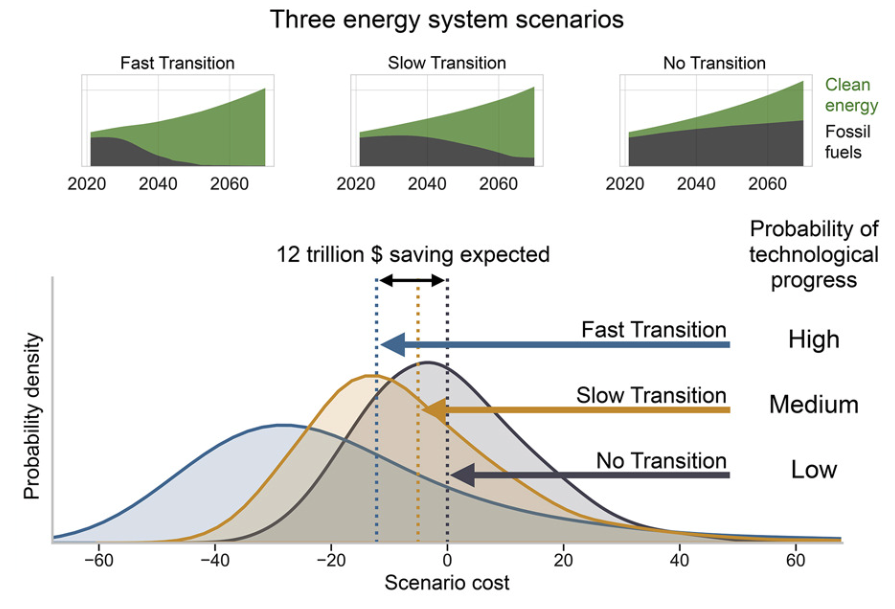
The economic upside of renewable energy boils down to a few simple principles. Firstly, mass-produced technologies like solar panels, wind turbines and batteries have steep innovation curves, which means efficiencies improve and costs come down faster than many anticipated. Secondly, fossil energy is grossly inefficient by comparison, only converting roughly one-third of global primary energy into useful energy, with the rest mostly lost as heat. Consequently, we ‘overpay’ for fossil fuels, because we purchase the energy we waste as well as the energy we use. By contrast, for renewable energy, we can use most of what we generate, especially with the complement of battery storage. And thirdly, while the infrastructure costs for a rapid energy transition are substantial, these are more than offset by the avoided expenditure on fossil fuel feedstocks into perpetuity. Renewable energy assets are the entry ticket to decades-worth of electricity that does not need to be paid for, rather than decades-worth of fossil fuel dependency that does.
It must be emphasized that a shift to electrification is not guaranteed relief to inflation. From a cost-of-living perspective, a lot hangs on what form the energy transition takes. If electricity markets are tailored to utilities that aggressively pursue shareholder dividends, then renewable energy and electrification will be more costly than it might’ve been. If electrification is advanced only through the expansion of private debt, then it will weigh on household budgets and SME balance sheets (and it will weigh even more if — oh the irony! — interest rates are increased to counteract fossil-fuelled inflation).
Furthermore, the global supply chain for critical minerals and rare earths is not invulnerable to bottlenecks and blockages, nor to geopolitical manipulation. A flight from fossil fuels might insulate us from the petrostates, including the increasingly unpredictable US, but it increases our immediate dependency on China as the world’s electrotech manufacturing superpower. Choose your fighter!
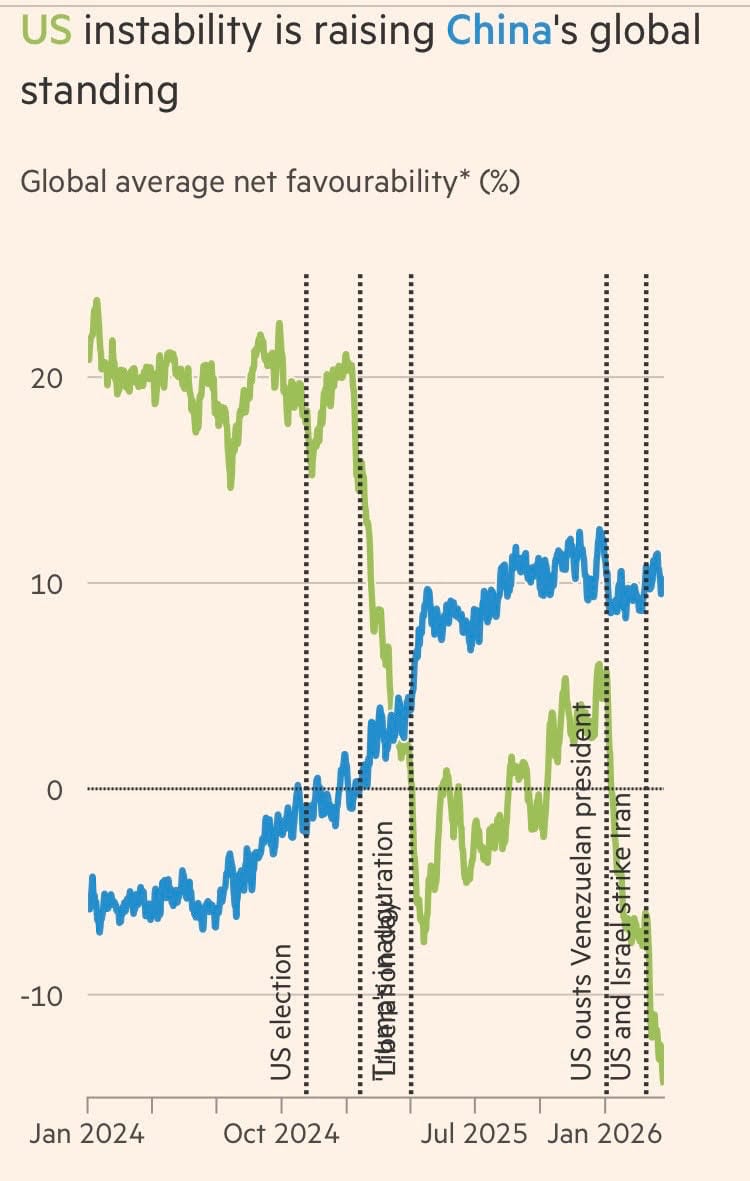
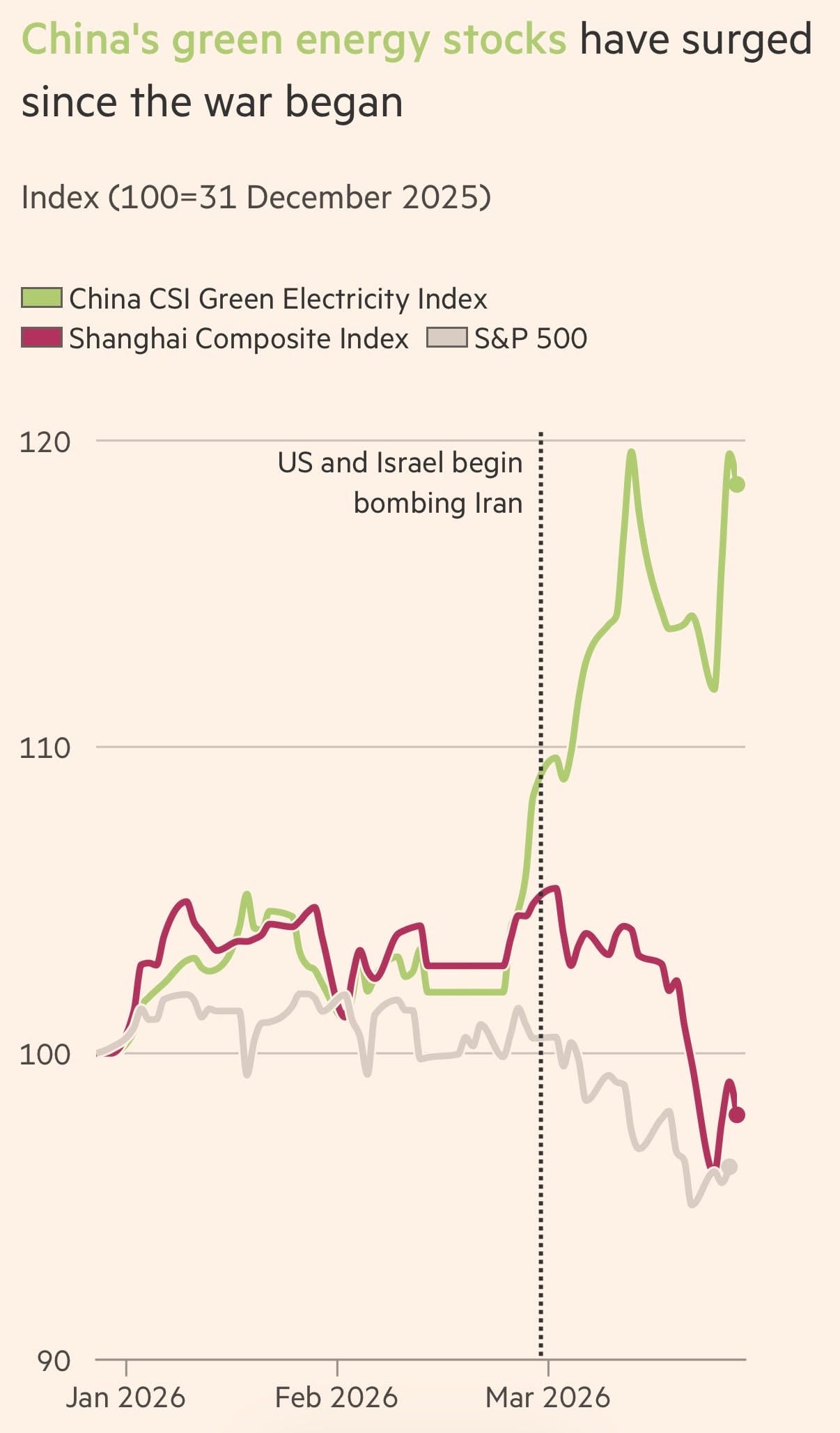
Source: https://www.ft.com/content/47edd17c-366f-42e4-b0cf-c20e065210d2
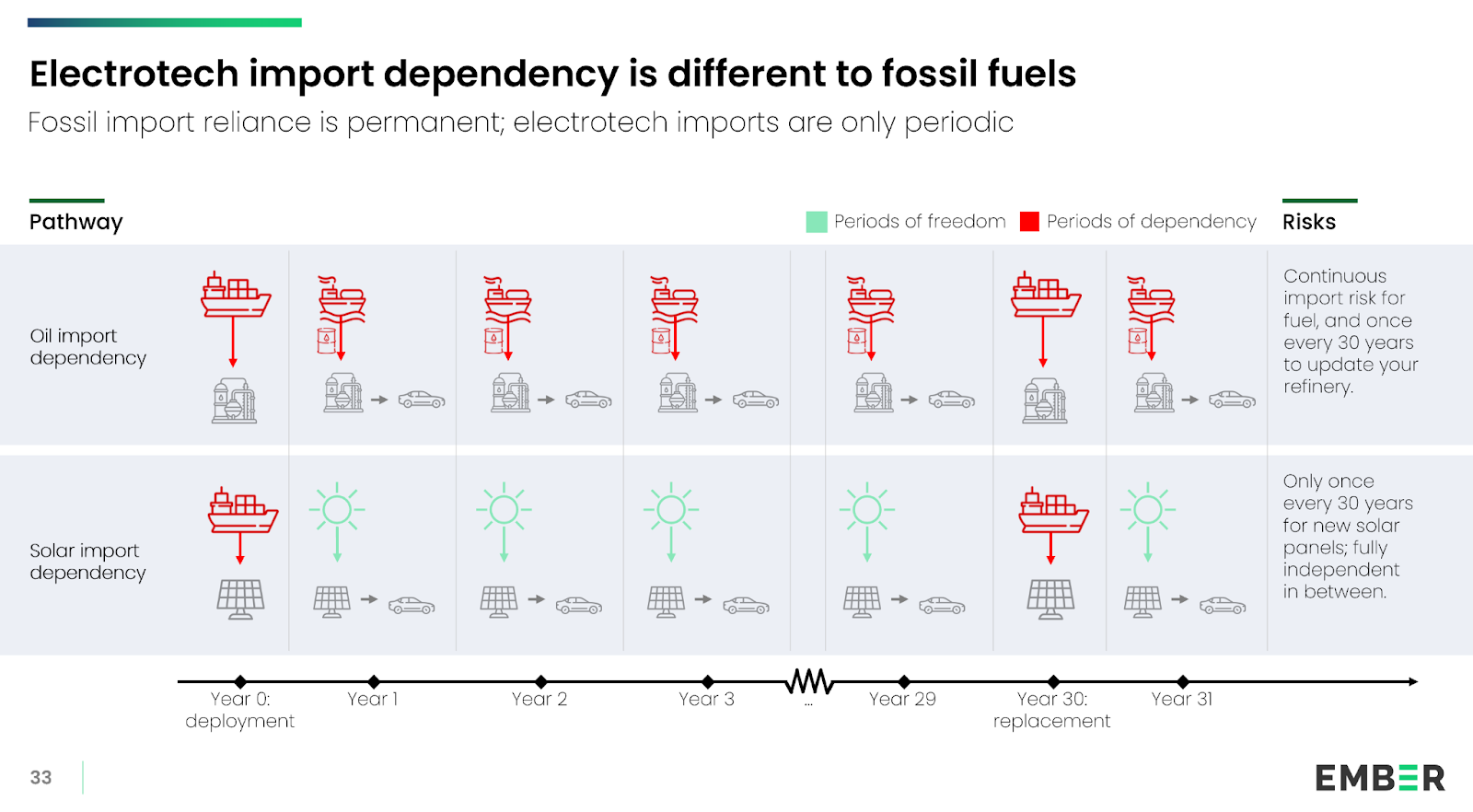
But one thing to say – and this connects energy costs to energy security – is that renewable energy is relatively less exposed to the type of shock that is manifesting today. Its material dependencies are confined to the purchase of energy infrastructure every few decades (or however long the asset lasts), plus some maintenance over time. In a fossil energy system, the material dependencies are the purchase of energy infrastructure plus unceasing purchases of fossil fuel feedstocks over time. This results in a perpetual, rather than intermittent, exposure to the vicissitudes of global commodities markets.
New renewable energy technologies cannot make us perfectly autonomous, because we are unlikely to establish a self-sovereign supply chain for solar panels or batteries anytime soon. But in a disorderly global environment, we improve our energy independence substantially by disconnecting from foreign fossil fuels and hitching ourselves to our own abundant supplies of sunshine, wind, water and geothermal energy.
If long-run costs and energy security are the public’s greatest concerns, the transition to renewable energy should be a winning narrative.
Until recently, though, most New Zealanders were not persuaded.
Polling by Horizon Research in late February, published in Newsroom, found that the largest share of respondents (37%) supported the Coalition Government’s proposed LNG facility, compared to 26% who opposed. Nearly one-quarter had no position and 14% didn’t know.
Subsequent events in the Middle East have likely sharpened many minds. Even the National Party appears to be calculating a climbdown on its commitments to the LNG terminal.
Yet it is remarkable that a plurality of New Zealanders ever supported this costly, risky proposal. It is also remarkable that 'the persuadables' — that is, the people without a strong opinion either way — were left on the fence. The climate movement, as well as everyone who favours renewables on the grounds of economic efficiency, had failed to win the argument, despite the evidence that renewable energy is viable, reliable and cost-effective.
The climate movement needs to tell better stories, to link climate solutions to multiple societal ambitions and aspirations, and to dismantle the myth that fossil fuels are safe, secure and dependable.
Last month, I was one of thirty authors published in the book, Kiwis in Climate. Reading over the other marvellous contributions, I was struck by how many chapters, by anticipating a decarbonized future, were well-attuned to the needs of this moment as fossil fuel flows are being abruptly tightened.
Several authors discuss the energy transition and the risks of fossil fuels. On transport, a chapter by Tim Adriaansen and Marie Guerreiro (All Aboard Aotearoa) calls not only for electrification, but also the diversification of transport. In promoting public and active transport, they advocate for a multi-modal transport system that would continue to move people even if petrol vehicles are too expensive to run — indeed even if electric vehicles are too expensive or supply-constrained to purchase. The Mayor of Auckland is echoing this thought.
Sam Lang and Sam Hogg’s essay on ecological farming explains how careful soil management can remove the need for synthetic fertilizers like urea, which is escalating dramatically in price (see the chart below). Hogg talks about his own family’s transition at Mingiroa Farm, a leap into the unknown at the time, yet compelled by the costs of fertilizers which had dragged the farm to the verge of insolvency.
This is complemented by Emily King’s (Spira) compelling vision for resilient food systems, which decouples from fossil fuels by reducing fertilizer use and increasing distributed energy generation. She also envisages the distribution of affordable and nutritious food through regional food networks, which directly counteract the high prices of the industrialized, export-oriented food system.
I could go on, but the point should be abundantly clear: In a cost-of-living crisis, we should not resent the apparent demotion of climate change as an issue of public concern. Rather, we should revel in the contributions that climate action can make.
We should join the dots between inflation and fossil fuel dependency, and raise awareness about the alternatives. We should help our families and neighbours to kick fossil-fuelled habits, to trial an e-bike if they haven’t already, to disconnect from gas infrastructure, to support hybrid working — whatever is within reach. We should leverage our roles as citizens, consumers, investors, employees and role models to shift the systems we operate within, to nudge our institutions away from treating fossil energy as the riskless default. We should support communities to transition with their agency intact, rather than be bullied into change by extraneous shocks.
Sometimes we should refer to climate change as a reason for climate action, but not always. Sometimes we can instead refer to cost-of-living, affordability, energy security, resilience, health benefits, and more. Indeed, we should leverage these reasons whenever we can, taking a page from the Hartwell Paper’s advice to ‘lose the object and draw nigh obliquely… to approach the object of emissions reduction via other goals, riding with other constituencies and gathering other benefits.’ This way we save talk of climate change for when it’s the only reason to justify what we are doing (for instance, when we’re protecting against sea level rise that has not arrived yet). If we are pursuing practical progress — rather than the symbolic victory of making everyone fear climate change more than anything else — then we can’t afford for the public to tire of climate action. We need to preserve enthusiasm and good will for the long journey to net-zero and beyond.
Fear has a place in climate discourse: it helps to focus minds and it can precede courage. Yet communicators should be strategic with fear-based messaging, especially in the context of overlapping crises (or ‘the polycrisis’ it is sometimes called). The last thing most people want is a pissing contest over whose emergency is the worst.
What people really need is something to believe in: a sense that climate action will deliver us to a safer, stabler world — with benefits that people can realise in the present. As Emily King says in her chapter: ‘We need to create an intergenerational vision that people love.’
Ultimately, this is a matter of narrative strategy. Changing people’s beliefs is long, painstaking work. This needs to be done, but in the near-term, we can also meet people where they actually are: we can acknowledge the fears and aspirations they already hold, discover what motivates them, and triangulate our way to climate-aligned actions that they see value in undertaking. Rewiring Aotearoa (which I was a co-founder of) does this very well — and it engages audiences that past advocates failed to tap. This does not lead automatically to action, but good storytelling can prepare the ground, giving confidence to others to step forward when the moment is right. An electrified future looks less alien, less daunting, than it used to.

Public policy – which I don’t have space to dwell on here – also plays a critical role by reorganizing people’s incentives, and enabling and empowering people to act in ways they previously felt they couldn’t. People often resent climate policy, but not always because they resent its objectives. They often resent climate policy because it’s just bad policy that makes costs higher and inequalities more acute, that wastes public resources and community effort, and that fails to achieve its objectives. In the midst of a cost-of-living crisis, for instance, any increase to the first-best policies of emissions pricing and fuel taxes is dead in the water. Similarly, subsidies for electrifying industry are asking for trouble if not complemented by support for struggling households and small businesses. The policy mix should be sensitive to public acceptability, not by retreating from hard decisions, rather by creatively reconciling the tensions.
I started with Fitzgerald’s well-known quip about intelligence as holding ‘two opposed ideas’. What is less well-known is the illustration he gives:
One should, for example, be able to see that things are hopeless and yet be determined to make them otherwise. This philosophy fitted on to my early adult life, when I saw the improbable, the implausible, often the "impossible," come true.
Anyone working on climate action, or social change in general, will recognise the sentiment. Despite all the ill-tidings — the manufactured obstruction, the public backlashes, the authoritarian upheavals, the dismantling of policy — you just keep going, partly because there is no other option now, but also because there are infinite possibilities ahead of us. The future is untold, undetermined. We cannot make the future whatever we want, but we can have an influence, sometimes even in the direction we’d hoped for.
A good strategy can make the improbable, the impossible, come true. It can win from behind, turning defeat into triumph. In his extraordinary book, Strategy: A History, Lawrence Freedman says:
It is about getting more out of the situation than the starting balance of power would suggest. It is the art of creating power.
For the underdogs, who must develop strategy from below rather than above, there is a special importance for narrative. A successful narrative, Freedman writes, can ‘link certain events while disentangling others, distinguish good news from bad tidings, and explain who was winning and losing.’ This creates power by helping ordinary people to see their circumstances in new ways, to merge interests and form new coalitions and constituencies, and to siphon away the authority of the status quo.
A lot of climate activists — and I mean this in the broadest sense of anyone who wants to act on climate change — feel paralyzed in this moment, at a low ebb, frustrated by Trump’s ascendancy and other country-specific backlashes against climate action. But we don’t yet know how this story will end. In the coming months, climate denialism might be tainted permanently by the meanness, recklessness and stupidity that it associates with, a thread in the knot of Trumpist demagoguery that global publics are coming to despise.
This might happen, or it might not. It depends on what stories get told — and how well. The hard knocks ahead are going to hurt, but in some stories they will be a turning point for the better.
Thanks for reading this far! If you haven't already, please subscribe to receive future essays like this, as well as other updates and transition-related briefings.