

In this week's edition of The Pointillist, a spotlight on digital public infrastructure (DPI) for people and planet: its promise and perils, its opportunities and risks, and the competing pulls of centralization and decentralization.
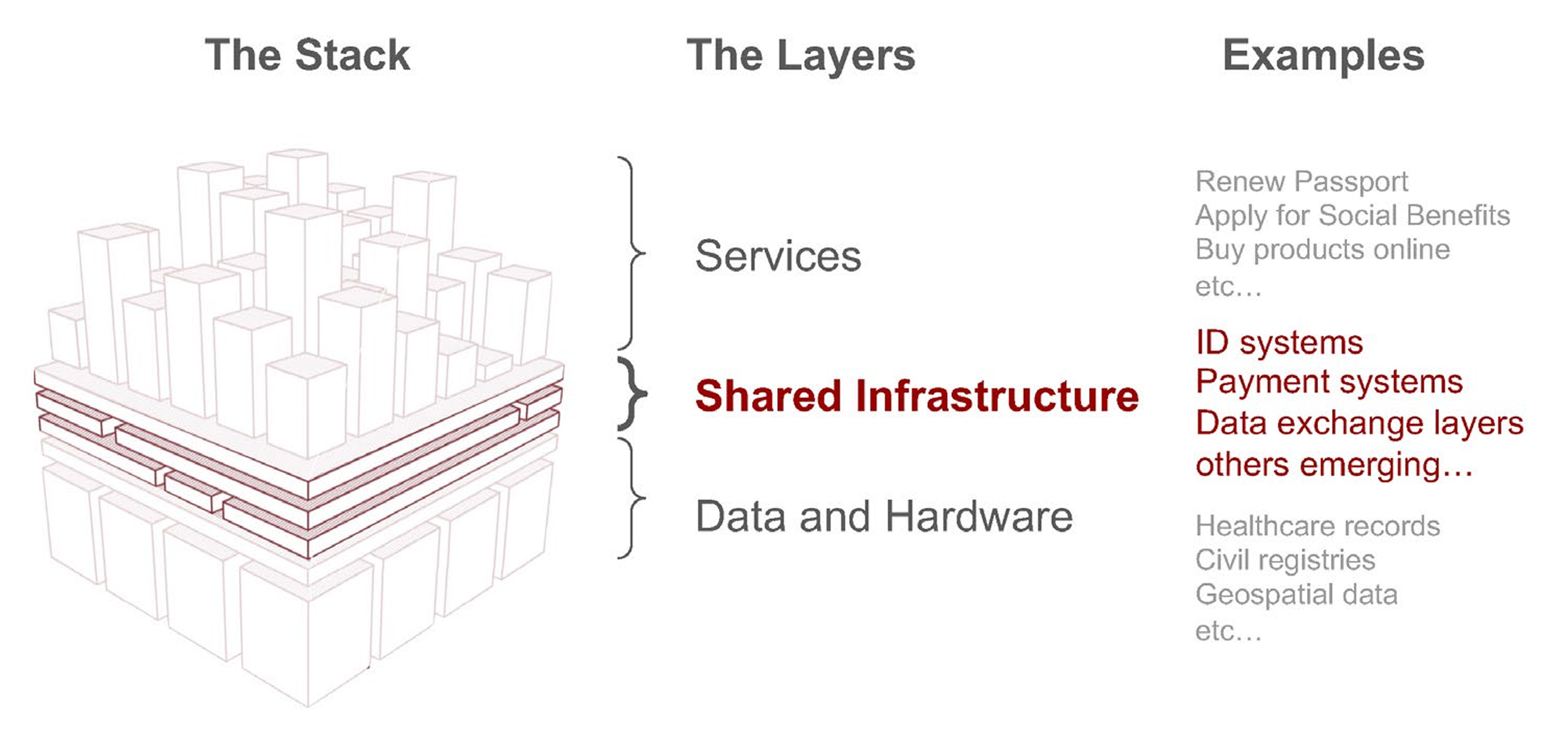
First of all, if you aren’t familiar with the concept of DPI, then it's hard to go past David Eaves's 'stack' as a single image explainer of DPI as 'shared infrastructure'.
Another useful resource is this wiki from the Centre for Digital Public Infrastructure (DPI), which takes you as deep into the detail (or deeper) as you'd like to go.
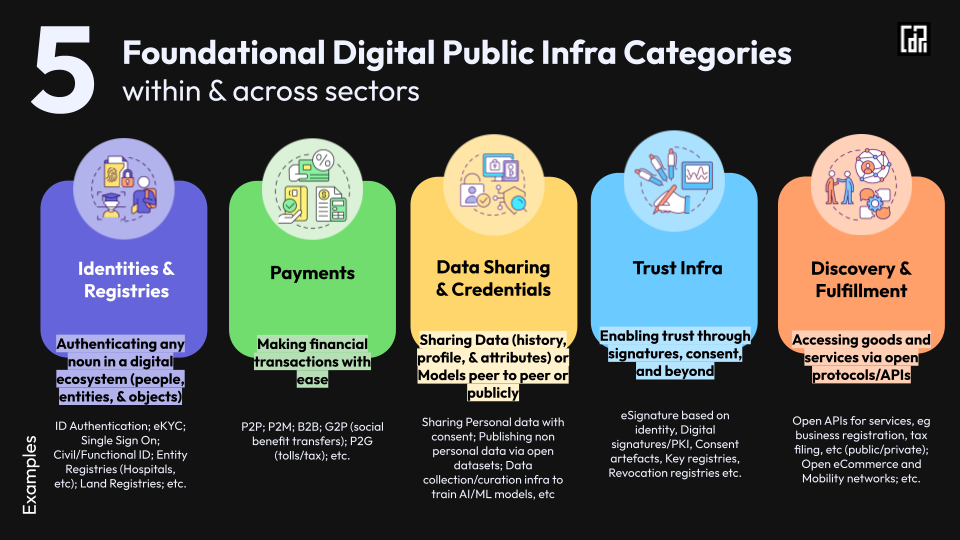
For an Aotearoa New Zealand perspective on DPI, see this 2024 article by Deloittes’ Luke Collier, published in the IPANZ magazine Public Sector. This includes a stack-style diagram (below) which conceives of DPI as a software layer that builds upon the more familiar, foundational layer of digital infrastructure.
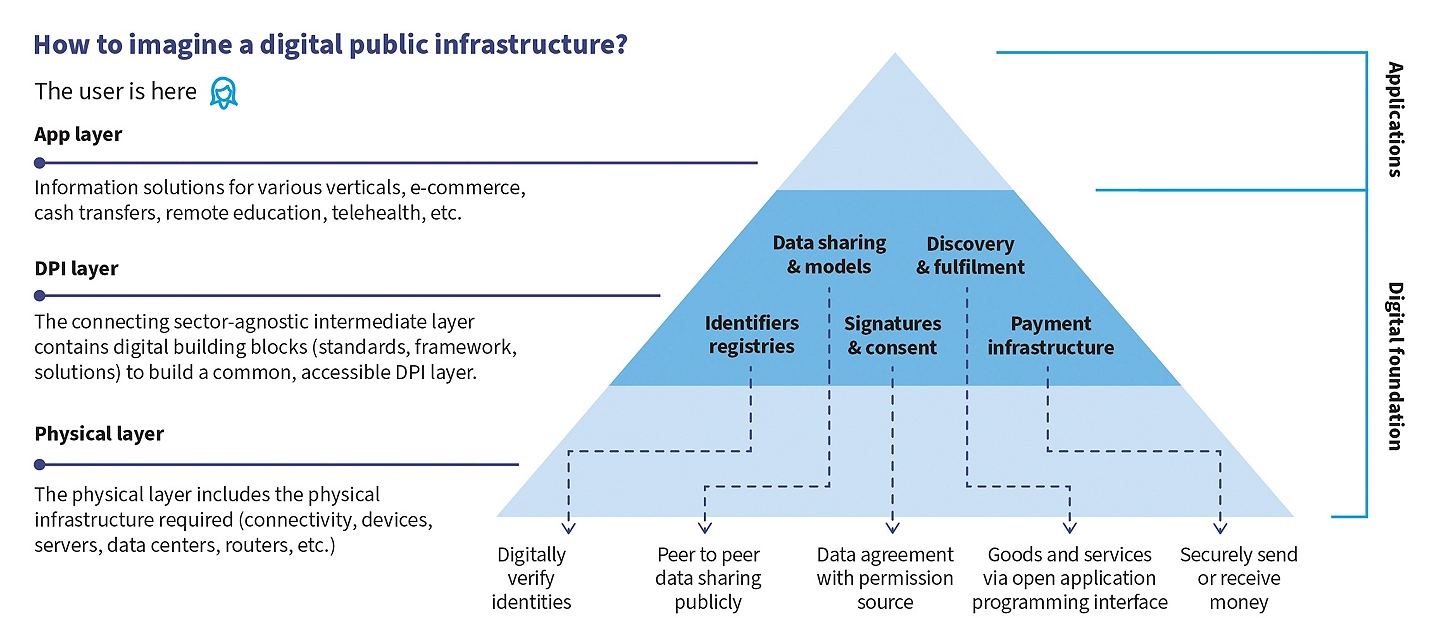
In other words, DPI is data-as-infrastructure which generates new services and capabilities for human enablement and empowerment (e.g. identities and registries, payment systems, data sharing and credentials, trust infrastructure, discovery and fulfilment). This is distinct from, but dependent upon, infrastructure for data, which is the hardware and software that underpins the digital economy as we know it today (e.g. data servers, fibre optic cables, operating systems).
The idea that DPI might serve ‘people and planet’ was inherent to its early formalization under India’s G20 Presidency in 2023, which made an explicit connection to the 2030 Agenda for Sustainable Development. The G20 defined DPI as:
a set of shared digital systems that should be secure and interoperable, and can be built on open standards and specifications to deliver and provide equitable access to public and / or private services at societal scale and are governed by applicable legal frameworks and enabling rules to drive development, inclusion, innovation, trust, and competition and respect human rights and fundamental freedoms.
So far, however, DPI has mostly manifested as an accelerant for economic opportunity, especially to increase economic inclusion and capacity in developing economies. Aadhar in India, Pix in Brazil, and X-Road in Estonia are the oft-cited examples.
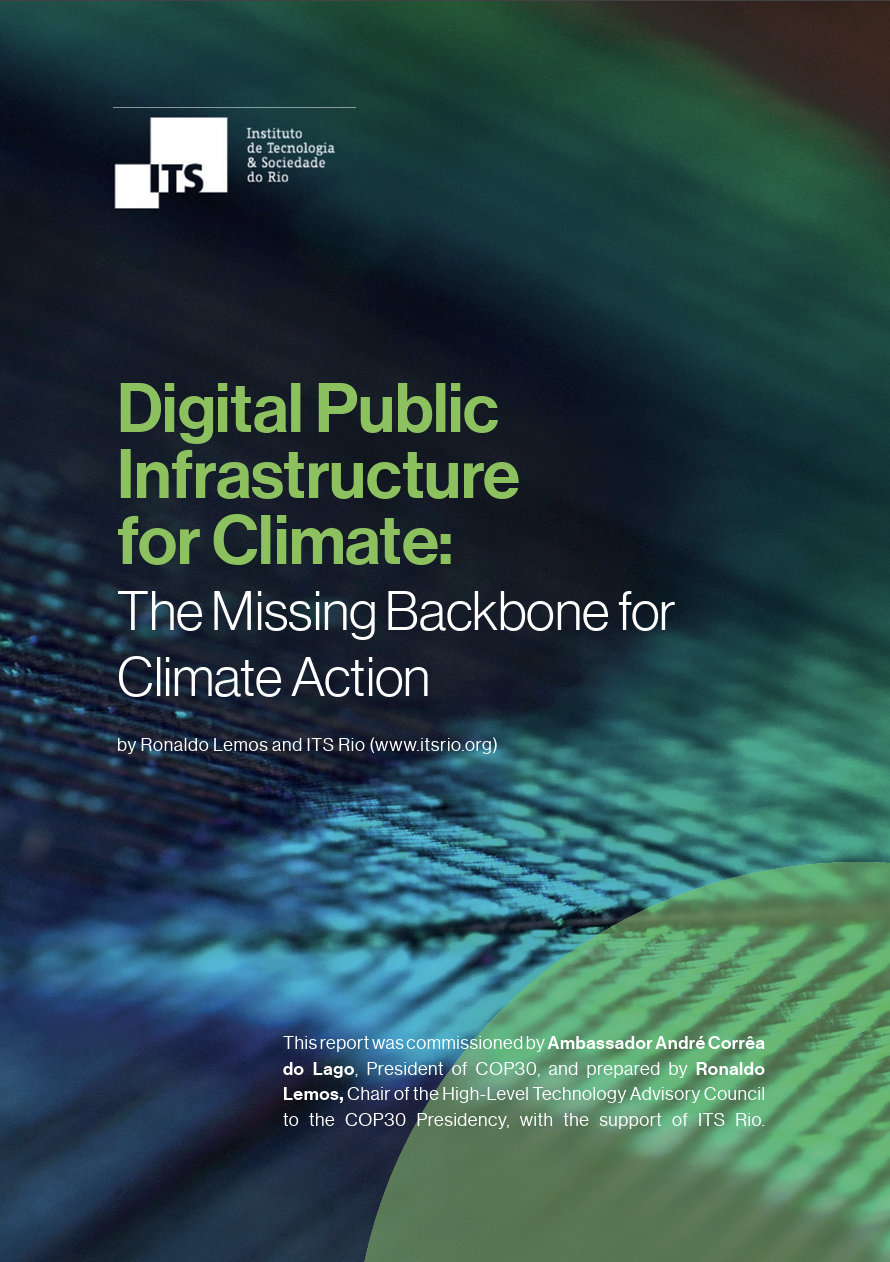
The idea of Climate DPI only coalesced under Brazil’s COP30 Presidency in November 2025. As I described in The Shift #2, the COP30 Action Agenda has 30 action-oriented themes, one of which is Artificial Intelligence, Digital Public Infrastructure & Digital Technologies. I attended the launch of its flagship report in Belém, which defined Climate DPI as follows:
At its core, Climate DPI represents a paradigm shift in how the world confronts climate change, moving from fragmented efforts to a unified, information-rich, and collaborative approach. Just as physical infrastructure (roads, grids) enabled economic development in the 20th century, digital public infrastructure will enable climate-resilient development and deep decarbonization in the 21st century. By investing in Climate DPI, nations collectively build a foundation that amplifies transparency, fosters trust, and accelerates innovation in climate solutions. It leverages modern technology, satellites, sensors, AI, blockchain, in service of our most pressing global goals, making climate action faster, fairer, and more effective. Importantly, it treats knowledge and data as a global public good, aligning with the ethos that climate change is a common challenge requiring unprecedented cooperation.
We conclude that Climate DPI is a game-changing enabler: it will help close information gaps that hinder decision-making, reduce transaction costs that slow finance, and link stakeholders from the grassroots to the global level in a common ecosystem. Without such infrastructure, efforts will remain piecemeal and suboptimal. With it, we unlock the potential for exponential progress, be it mitigating emissions through smart systems or saving lives via early warnings.
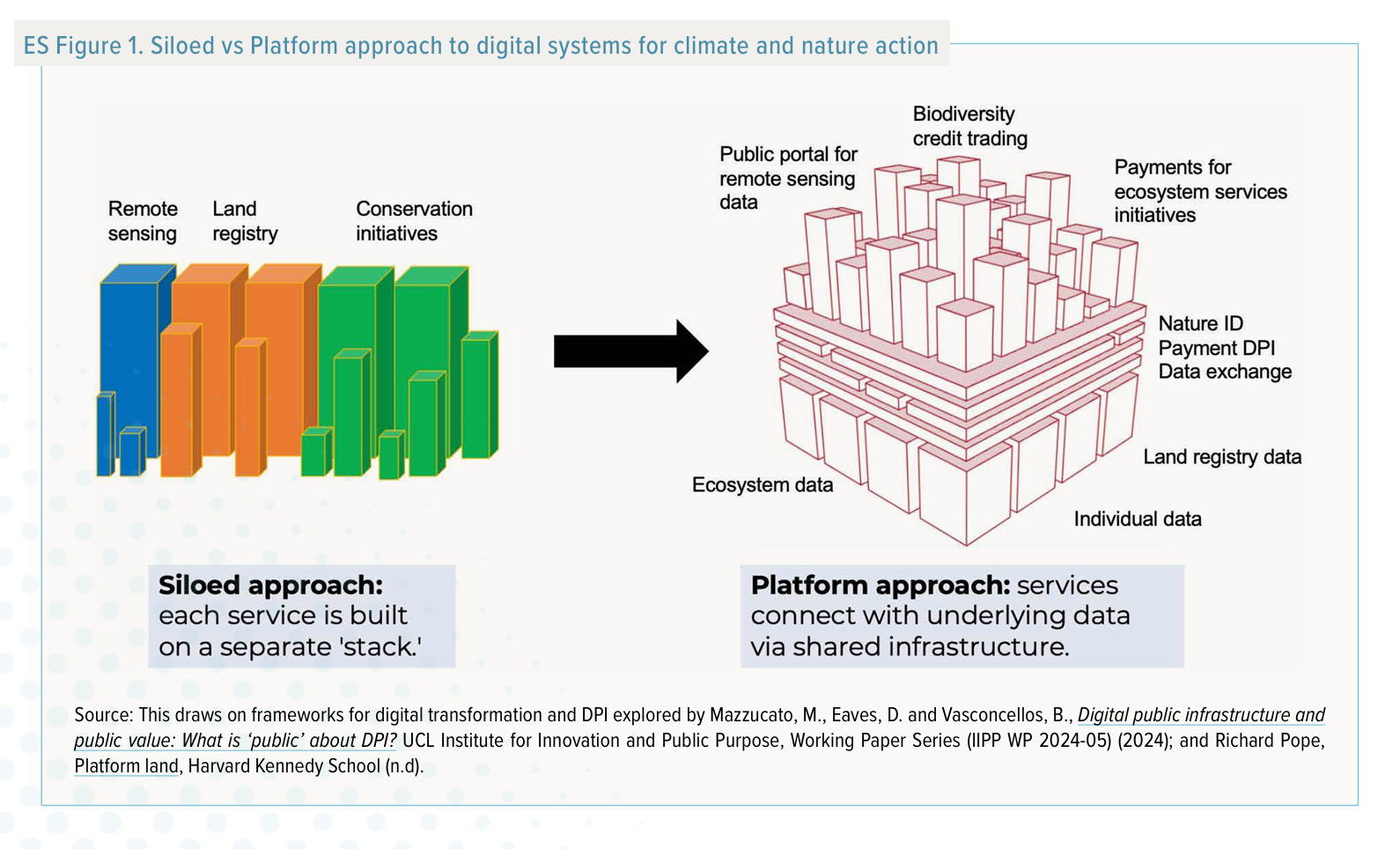
This COP30 initiative complements an earlier report, The Case for Nature ID, by the UNDP as one of the early champions for DPI as a catalyst of sustainable development. (Again, I was fortunate to attend the report launch at the UN Biodiversity Conference COP16 in Cali, Colombia in November 2024.) The Nature ID concept has a strong focus on DPI's potential to overcome data silos in existing data sets and instead to unlock:
Nature ID as a data exchange system for environmental data. Rather than a single repository of information, Nature ID would link diverse datasets (e.g., remote sensing, administrative records, Indigenous knowledge), serving as an interoperability layer that would enable different services to share and verify data securely.
A similarly integrated approach to climate resilience data was advanced in this proposal from the UCL Institute for Innovation and Public Purpose (IIPP) where David Eaves is Co-Deputy Director and Associate Professor in Digital Government (co-authored with Beatriz Vasconcellos, Richard Gevers, and Liam Orme).
Building on the motif of ‘the stack’, the proposal identifies various digital capabilities (data collection, analytics, remote sensing, etc.) to form a shared infrastructure layer, which deliver resilience-enhancing services of preparedness, anticipatory action, response and recovery, and evaluation.
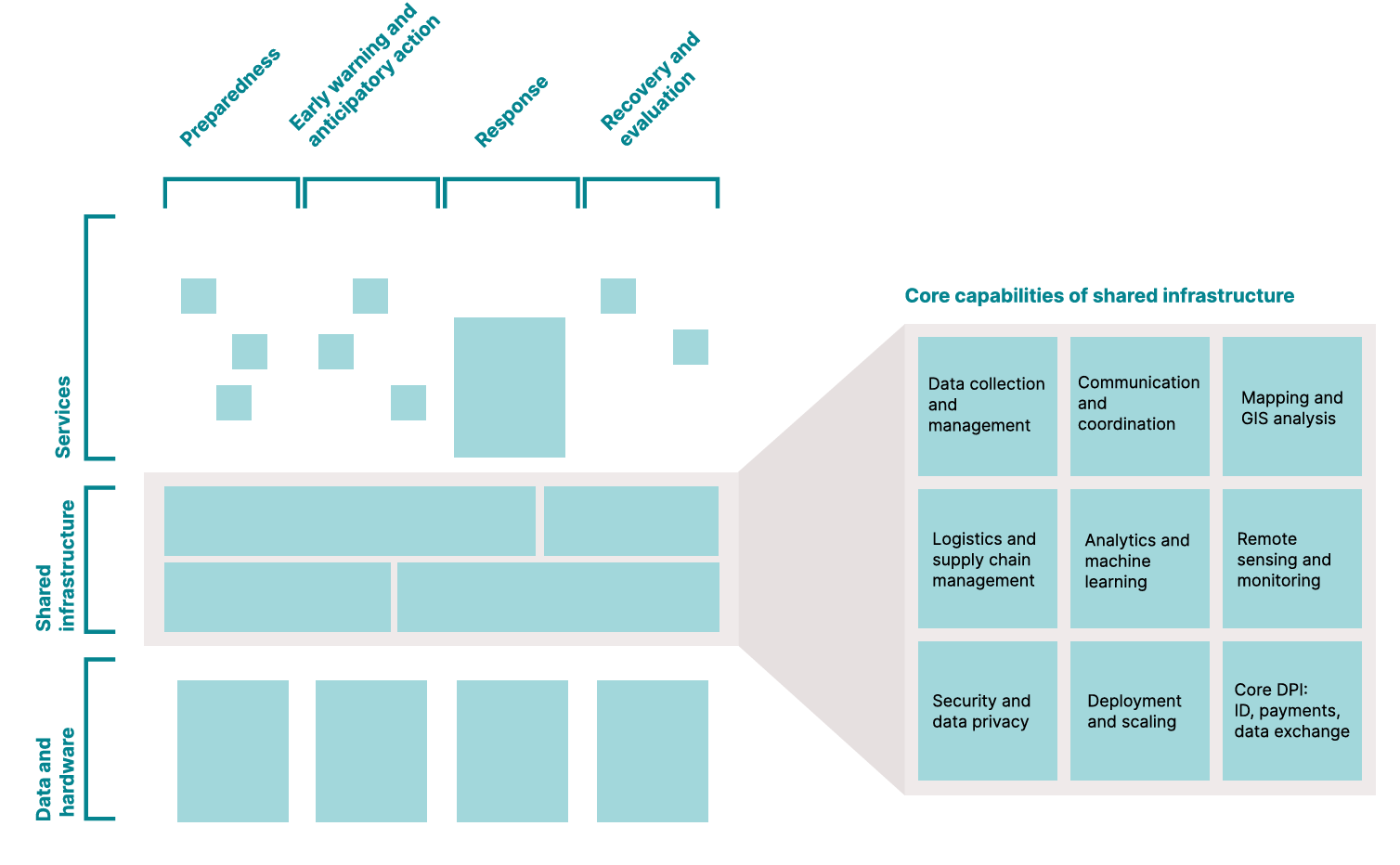
For implementation, the first principle is that the components of the DPI layer are already out there, they just need to be acquired and assembled to build new capabilities:
Our guiding hypothesis is that stacks emerge from existing tools. This is an active process building on distributed learning and experimentation. Understanding how one might assemble a stack from existing and emergent tools requires an understanding of the valuable functions for a climate emergency stack, as well as the landscape of existing components.
As Eaves has discussed more recently in Tech Policy Press, this magpie-style approach has the added benefit of addressing the issue of data sovereignty, especially for smaller countries and ‘middle powers’ that cannot afford to build their own fully sovereign stack. (See The Pointillist #3 for an earlier discussion of this dilemma.) Instead, Eaves's recommends that countries spread their risks across multiple vendors and impose standards across them all. He writes:
Sovereignty through ownership risks being a fantasy for all but the wealthiest. Sovereignty through interoperability may be achievable for nearly everyone.
These themes of sovereignty and climate resilience connect to an ongoing conversation in Aotearoa New Zealand about improving access to climate adaptation data. I contributed to this topic in my role as independent specialist advisor for the Finance and Expenditure Committee’s inquiry into climate adaptation in 2024. For what it’s worth, here is how this showed up in the final report:
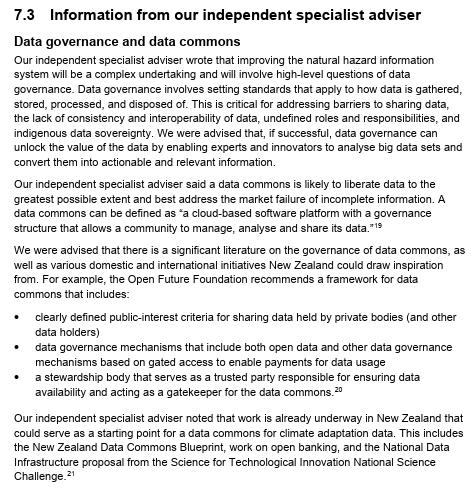
Ultimately, the committee ‘recommend[ed] to the Government that it develop an accessible public data commons for data on natural hazard and climate risk, with the aim of improving the data’s quality, consistency, and availability.’ A DPI approach seems the right way to approach this goal, especially if oriented toward openness, modularity and interoperability.
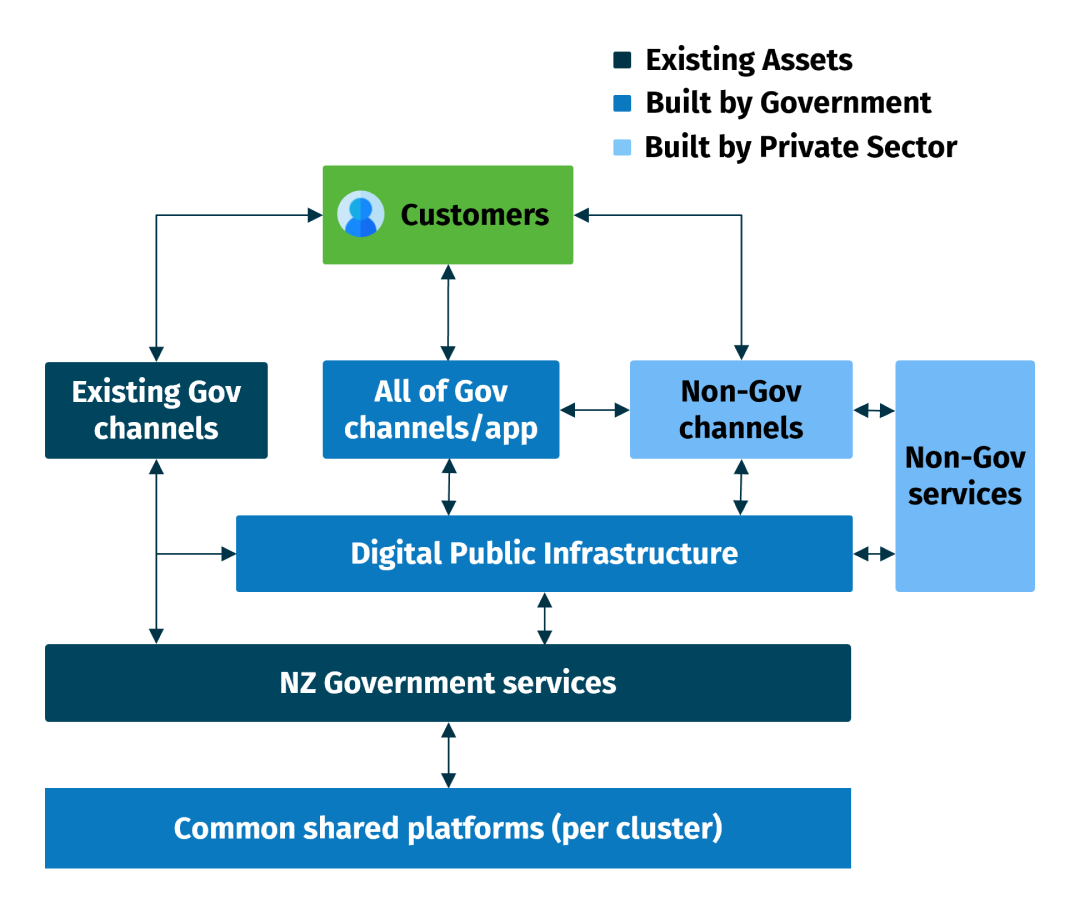
The New Zealand Government is starting to incorporate these concepts into its Digitising Government Programme to improve government digital investment, procurement and delivery. DPI is identified as a vital layer for its Digital Target State, its vision for a future public-sector operating model (see the simple diagram below, or a more detailed version here). Yet the promise that DPI will be 'built by government' cuts against the logic of Eaves's magpie-style approach, while also raising questions about capability and execution.
I do hope someone in government is bringing these various threads together — DPI, climate and nature — but I worry that our parliamentarians aren't yet up to speed with recent developments in DPI. If any are reading this, however, please don't hesitate to reach out to discuss!
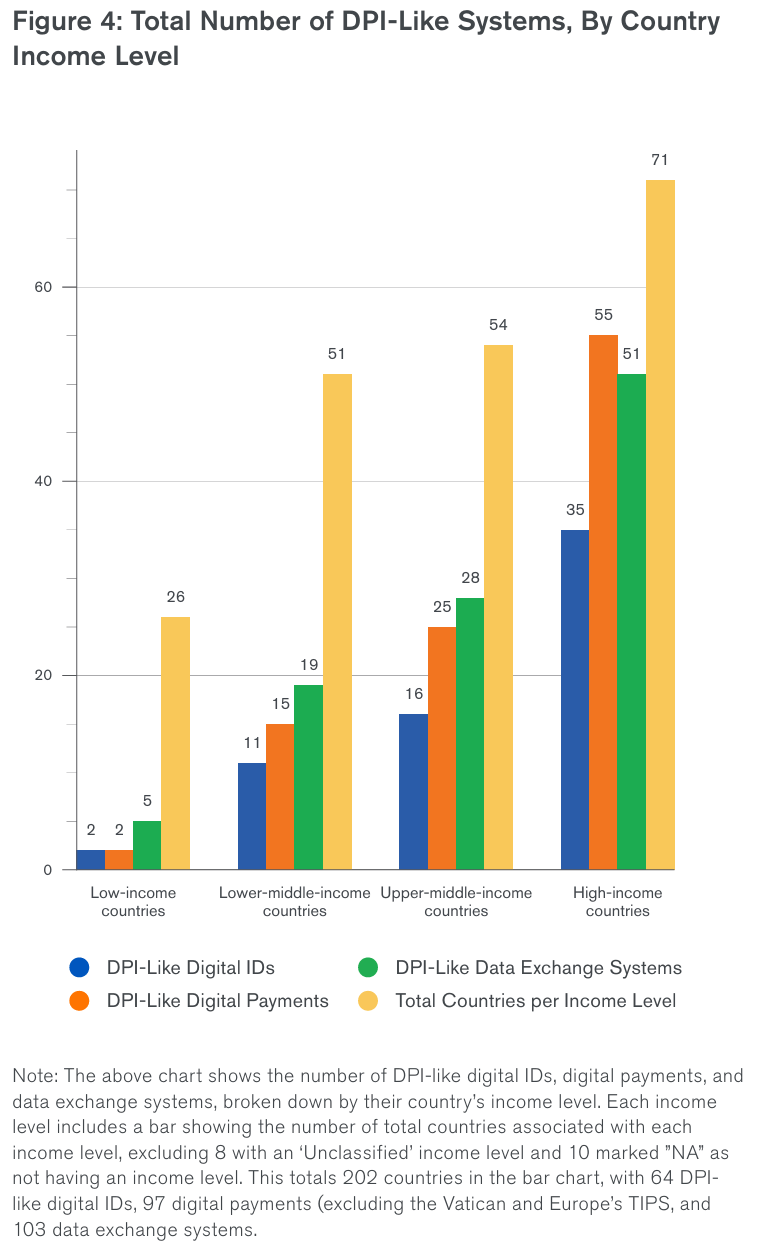
Speaking of Eaves’s work at IIPP, his team (including Jordyn Fetter and Krisstina Rao) recently published its 2025 State of Digital Public Infrastructure Report, which draws upon the interactive DPI Map that they’ve created. At the time of writing, at least 68 countries have DPI-like digital ID systems (New Zealand's is a work-in-progress), 99 countries have DPI-like digital payment systems, and 103 countries have DPI-like data exchange systems.
Despite the emphasis on DPI in developing countries, existing systems are more prevalent among high-income countries, as per the chart below.
Eaves also co-authored with Sarosh Nagar this essay on the interactions between artificial intelligence and DPI. They conclude that:
AI and DPI are some of the most transformative technological developments of the 21st century… [with] huge potential to transform economies and reshape governments for the public good. [...] DPI can act as the foundation for better frontier AI models through improved data governance, debiasing, and standardization.
The flipside of this, however, are the risks of AI and DPI interactions. Eaves and Nagar highlight the example of Bhashini in India, an AI-led language translation system that aims to integrate with India’s other DPI systems to train on India’s minority languages:
If governments intend to follow India's lead in creating public AI training datasets from DPI data, for example, it is vital that all data is collected with individuals' informed consent before its collection — otherwise, DPI risks infringing on important individual rights for privacy. This data must also be stored in a secure place, with necessary cybersecurity and localization protections — otherwise, the sensitive data of millions of citizens may face elevated cybersecurity risks due to poor policy choices. In addition, there may be adoption challenges related to low levels of trust in government in some parts of the world, as some countries’ populations may not wish to use DPI at the levels necessary to truly empower AI systems. These examples are only some of the numerous ethical and values-based considerations that must be factored in when governments are deciding whether to use DPI to enhance the quality of AI tools.
Relatedly, in the UNDP's Nature ID report, WarīNkwī Flores of Kinray Hub warns about the balance of risks and opportunities for Indigenous peoples:
From an intellectual property rights perspective, a Nature ID ecosystem offers scope for the recognition of knowledge production and sovereignty, formalizing Indigenous contributions to environmental data collection, as well as reinforcing Indigenous Peoples’ role as environmental stewards. However, the Nature ID ecosystem also presents risks such as commodifying nature, assigning market value to nature assets that reduce complex ecosystems to transactional property relations, as well as data misappropriation. Biocultural data legitimacy deeds and titles therefore need to integrate robust safeguards, operationalizing Indigenous Peoples’ legal rights to data.
This is a reminder that DPI is not free from questions of power. Consequently, I was very grateful for the critical lens in this essay by Mila T. Samdub in Phenomenal World, which tracks the historical development of the India Stack with Aadhar as its foundational layer, spearheaded by the Indian state but increasingly steered toward commercialization by software thinktank iSPIRT:
India’s Digital Public Infrastructure was born from a unique articulation of forces in the 2000s: a remarkable alignment between a powerful state, a skilled software industry, and incipient capital in finance and consumer-facing startups in one of the most unequal countries in the world… In software capitalist slide decks, the citizen became congruent with the customer; the national population is reborn as a “Total Addressable Market.” As Aadhaar moved from the terrain of state-citizen relations to industry-consumer relations, iSPIRT’s imagined demand for software products shifted—from medium-sized businesses (such as regional hospitals) to the private affairs of the most impoverished individuals. A fictional vegetable vendor named Rajni, ubiquitous in Digital India’s advertising, became an exemplar of the potential of the new approach. With the new technologies of IndiaStack, Rajni no longer had to depend on local moneylenders; instead she could track her transactions, earn and pay in digital cash, and borrow at lower interest rates from fintech startups to enterprise her way out of poverty. In this fiction, private innovation delivered through state-funded digital infrastructures empowers the poor and develops the nation. This is a transformation in the means and the ends of economic development. “Financial inclusion,” pitched as a strategy for growing businesses while supporting the poor, operates today as an alternative to developmental aspirations of mass industrial employment that we have inherited from the twentieth century. In the future, as customers, citizens will pay for their own development.
 Mila T. Samdub
The issue of how state and market power manifests through DPI is an urgent one. It also carries an ironic sting because decentralized technologies, such as the characteristic Web3 technologies of blockchain and distributed ledgers, promise to be an escape from the centralized power of states and corporations.
Yet a recent article by Igor Calzada explores the inherent tensions through Richard Nelson’s paradox of the ‘the moon and the ghetto,’ the focal point for an eponymous book (1977) which asked why the US could succeed in landing people on the moon while simultaneously failing to lift people out of urban slums.
Nearly fifty years on, Calzada writes:
Nelson’s metaphor reminds us that technological capability is not synonymous with social progress. Just as reaching the Moon did not resolve the problems of the ghetto, building distributed ledgers does not, by itself, guarantee empowerment. The challenge for scholars, policymakers, and practitioners is to ensure that innovation systems are oriented toward justice, accountability, and solidarity.
Through empirical research on existing Web3 systems, Calzada finds that:
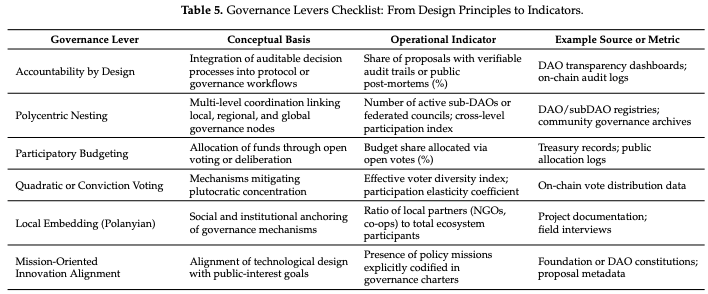
Decentralization as architecture routinely outruns democratization as institution. Token-weighted governance concentrates voice; participation imposes steep capability and attention costs; and, where infrastructures are weakest, inclusion hinges on intermediaries that remain under-recognized and under-accountable. [...] Without re-embedding marketized digital relations in social protections and public value (Polanyi), “permissionless” designs commodify participation and data, inviting elite capture. Without commons design—clear boundaries, participatory rules, monitoring, graduated sanctions, conflict-resolution arenas, and nested (polycentric) coordination (Ostrom)—distributed control drifts toward fragmentation or oligarchy. The task, therefore, is not more decentralization per se, but institutionalization of decentralization: turning networks into governable commons with enforceable rights, duties, and recourse.
Calzada identifies some of the hallmarks of a democratized Web3 architecture in the table below:
Finally, I must declare my interests in this space: I am a co-founder of Toha Network which is developing a community-led DPI extension to mobilize investment for nature and climate action. I would even say we are guided by a vision (a la Calzada) of a ‘governable commons with enforceable rights, duties, and recourse’.
A couple of years ago, we published a blog on our DPI approach, which is available here:
 Toha Network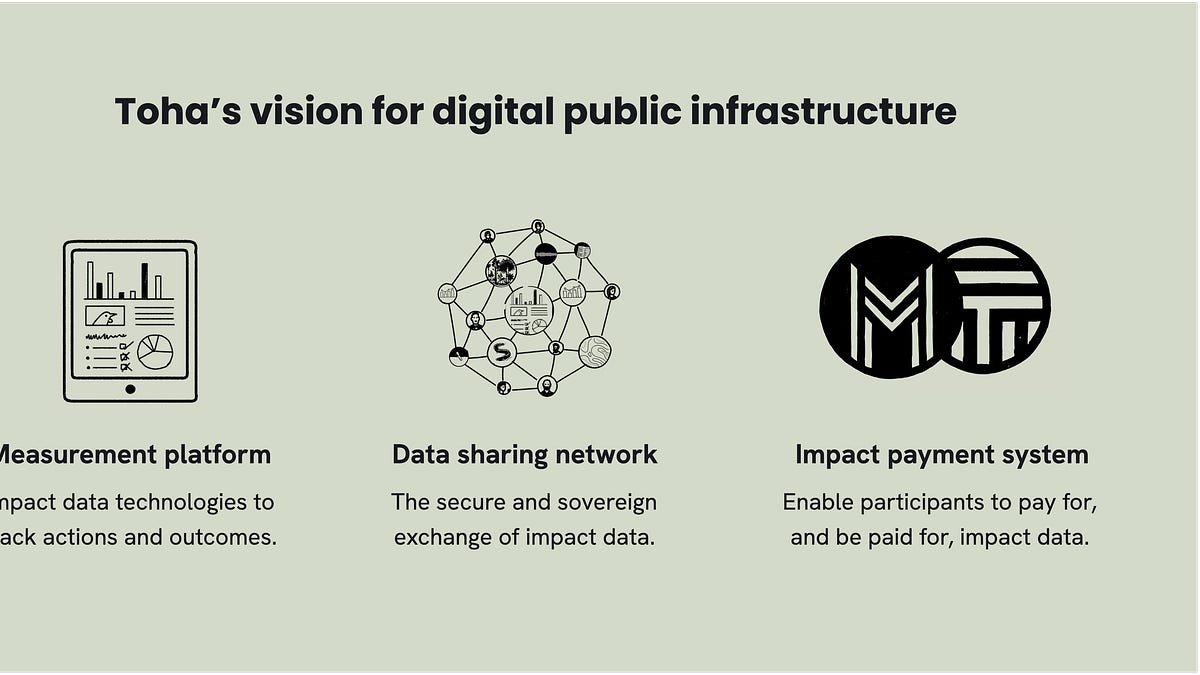
Further detail on the Toha system is coming soon, but reach out if you'd like to learn more at david.hall [at] toha.nz
Thanks for reading this far! If you haven't already, please subscribe to receive future content like this, as well as essays and transition-related briefings.